
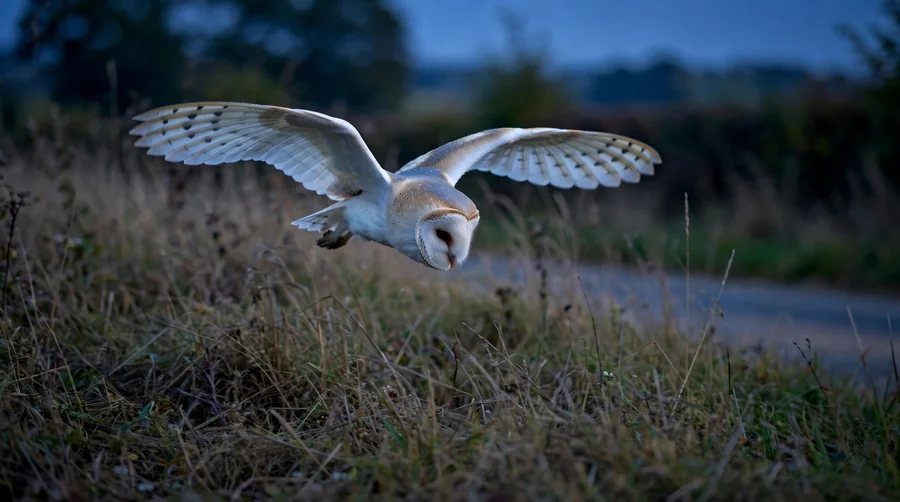
It came out of the dark at windscreen height, and for a second it filled the whole view. If you are shaking slightly, or you have just checked your mirror hoping not to see something on the road, read the next section first.
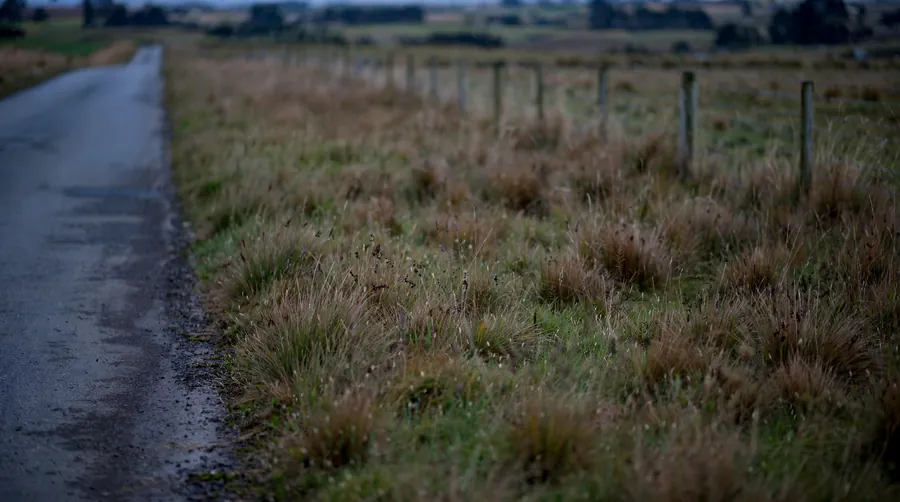
Then here is the fact that explains the entire encounter, and that not one page competing for this search mentions. The owl was hunting the verge. That strip of mown grass beside the road is a long thin meadow full of voles, and in a lot of farmed country it is the best rough grassland for miles. The owl was working it, as it works it most nights, and it crossed because the hunting on the other side is just as good.
You did not interrupt a message. You drove through a kitchen.
If you hit it, or you think you might have
Only if it is safe to stop — never on a fast road, a blind bend, or a motorway hard shoulder for this. Your own safety first, genuinely.
Do not assume it is dead. This is the part worth knowing. Owls that have been clipped rather than struck squarely are very often concussed, and a stunned owl lying still at the roadside can look exactly like a dead one. Birds recovered from roadsides and given a dark box and a few quiet hours do sometimes stand up and fly away.
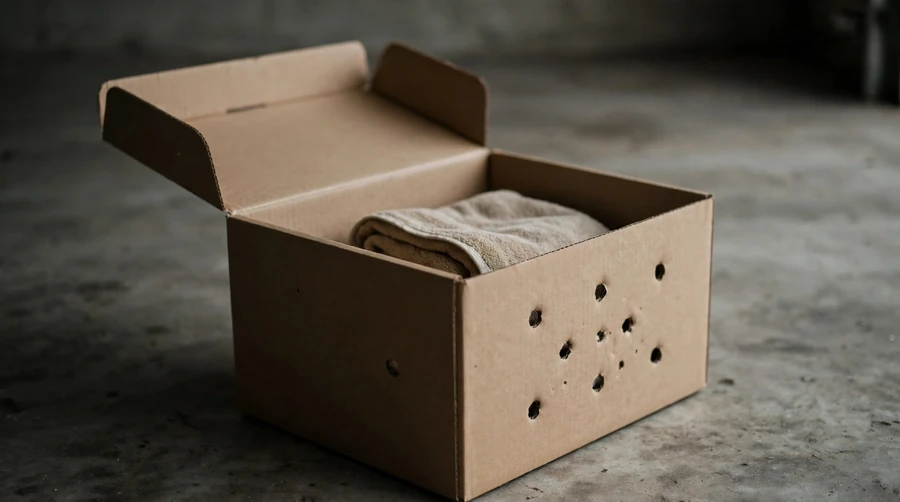
If you can reach it safely: thick gloves, a towel over the whole bird including the head, both hands around the closed wings, feet pointed away from you. Into a cardboard box with air holes and a towel in the base, lid shut, somewhere dark and quiet and not warm. No food, no water, no attempts at first aid.
Then phone a wildlife rehabilitator, a raptor rescue, or in Britain the RSPCA or the Barn Owl Trust. Wing fractures in owls are frequently repairable and head trauma often resolves with nothing but rest in the dark. A bird you were sure was finished has a real chance in the right hands.
This is the roadside protocol. If the bird is loose inside your house rather than hurt at the roadside, read what to do about an owl trapped indoors.
If it is plainly dead, two things. Move it off the carriageway if you can do so safely, because a corpse on the tarmac draws the next scavenger into the same traffic. And if you are in the UK, the Barn Owl Trust collects road casualty records — reporting it turns a bad night into a data point that gets used. In the US, be aware you may not legally keep a protected bird or any part of it, feathers included.
One more thing, and I mean it kindly. If you hit an owl on an unlit road at night, you almost certainly could not have avoided it. The guilt is real and it is not deserved. Reporting it is the useful thing to do with it.
The verge is a meadow, and we planted it
Go back to the spine, because everything else follows from it.
Road verges are grassland. They are cut occasionally rather than grazed or ploughed, they are fertilised by nothing, they are left alone for most of the year, and they run for hundreds of unbroken miles. That is close to ideal field vole habitat — and field voles are the staple prey of barn owls across their range.
Now put that next to the surrounding countryside. In intensively farmed landscapes, rough tussocky grass has largely gone: hedgerows removed, margins ploughed to the edge, pasture improved or cropped. The verge may genuinely be the richest hunting strip in the parish. Where perches are available, owls hunt the same ground from above — see our piece on an owl on your roof, which covers owls hunting from a vantage point over a rodent-rich area.
The Barn Owl Trust puts the mechanism plainly, and it is worth quoting the shape of it: barn owls habitually fly low, the grass on major road verges holds prey, and that encourages the birds to stay on the roadway rather than move on. A bird hunting one verge will sooner or later cross to hunt the other side.
So the owl was not drawn by your headlights. It was there before you came round the corner, doing the only sensible thing available to it — and the crossing that nearly killed it is a routine part of working a linear territory.
Why that puts it exactly at windscreen height
A hunting owl is a low, slow owl. Barn owls quarter open ground at walking pace, a few metres up, scanning by ear — and a few metres up is the top of a car.
Compare that with a bird travelling between places, which flies higher and faster and is in no danger at all. The owl you nearly hit was low because it was working. The behaviour that makes it good at its job is the behaviour that puts it in the path of a van.
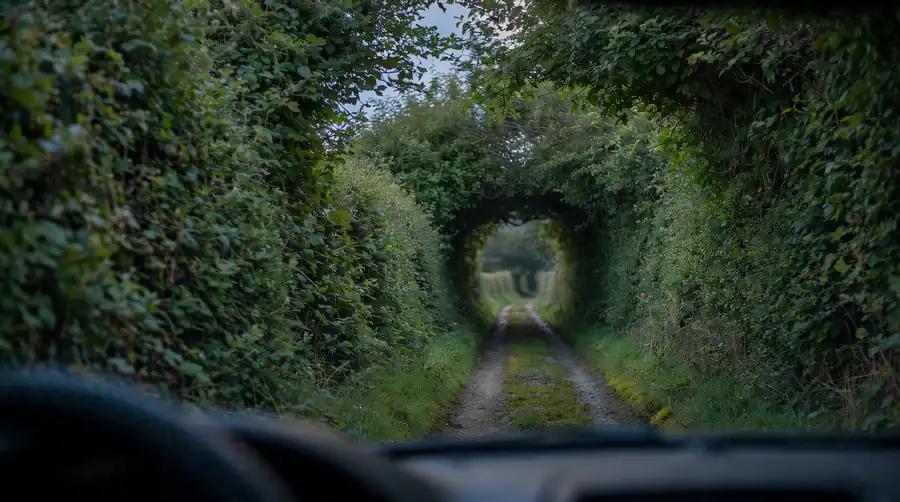
Two things make it worse. An owl carrying prey flies lower and slower still, because it is loaded. And on wide modern roads with no hedges, there is nothing to lift the bird’s flight line over the traffic — on an old lane with tall hedges either side, an owl crossing has to clear the hedge and arrives above the cars. Remove the hedge and the same crossing happens at bonnet height.
Which is why dual carriageways and improved roads are so lethal to owls, and quiet hedged lanes much less so. The danger is not the traffic volume. It is the geometry.
It cannot get out of your way
This is the part people find hardest to believe, because the bird looks so capable.
Nothing in an owl’s evolutionary history moved at sixty miles an hour. Every threat it is built to escape — a fox, a larger raptor, a person with a stick — closes slowly enough that lifting vertically out of reach is the correct answer. So that is the response it has: go up.
Against a car, going up is precisely wrong. It takes the bird through the windscreen’s path rather than out of it, and it is slow, because an owl’s broad soft wings are built for silence and lift rather than acceleration.
There is also the matter of attention. A hunting owl locked onto a sound in the grass is running a very narrow, very demanding task, and an animal in that state is a poor monitor of anything else. I would not overclaim the mechanism — “target fixation” gets used fairly loosely about this — but the general point stands: it was concentrating, hard, on something small and specific.
It did not misjudge you. It has no faculty for judging you at all.
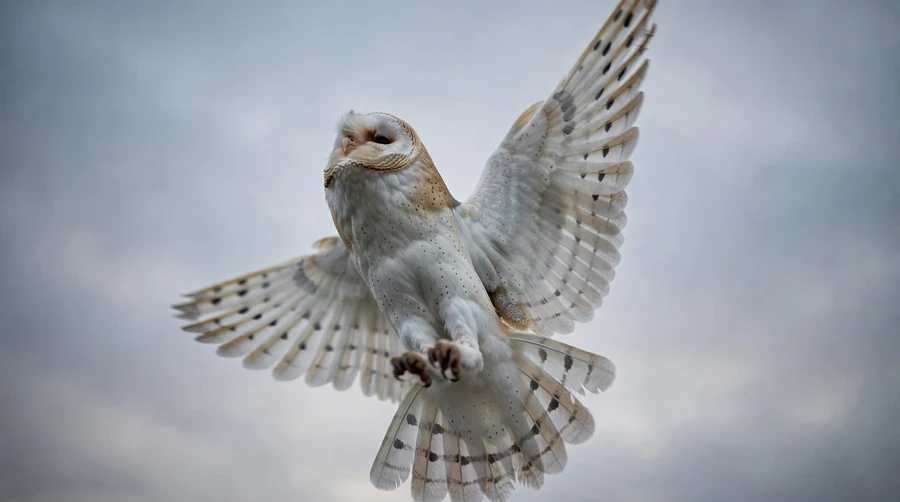
Four readings
1. It was working, not watching
Every page on this subject reads the encounter as addressed to you — a message, a warning, a nudge about your intuition. The owl was at its job, at the hour it works, on the strip it works, and it crossed your line because its line crosses yours.
That is not a smaller idea than being sent a sign. It is a reminder that most of what crosses your path is someone else’s ordinary evening, moving at full intensity, with no reference to you whatsoever.
Which is worth having on a bad day, in both directions. The person who cut you up, ignored your message, or walked past you without speaking was almost certainly mid-task on something you cannot see.
2. The larder and the kill zone are the same strip
This is the sharpest reading on the page and it is the whole situation in one line.
The verge is the best food in the landscape and the most dangerous place in the landscape, and it is one object. The owl is not making a mistake by hunting there. It is going where the living is, and the living is on the edge of sixty-mile-an-hour traffic, and there is no version of the verge that has the voles without the cars.
People live on those strips all the time. The job that pays well and takes everything. The city with the opportunities and the rent. The relationship that is genuinely the best thing available and genuinely costs. The honest response is not to pretend the danger is separable from the sustenance.
What you can do is notice which strip you are hunting, and how fast the traffic is.
3. Its escape response is correct for a world that no longer exists
Go up. For as long as there have been owls, that was the right answer to everything approaching, and it worked.
Then one species built roads and started moving at a speed nothing had ever moved at, and the correct answer became a fatal one — and there has been no time at all, in evolutionary terms, for anything to update. The owl is not being stupid. It is applying a well-tested rule in the one environment where the rule inverts.
Most people are carrying at least one of those. A response that was exactly right for the household, the school, the industry or the decade you learned it in, deployed faithfully in conditions that have since changed underneath it. The reaction is not the flaw. The lag is.
4. We built the trap by tidying
Nobody set out to kill owls. We removed hedgerows because they were inconvenient, ploughed margins because they were unproductive, widened roads because that was progress, and mowed verges because it looked neat.
Each of those decisions was reasonable on its own terms. Together they concentrated the prey onto the one strip of land we also drive along at speed, and removed the hedges that used to lift crossing birds above the cars.
That is how most harm of this kind actually gets made. Not by malice and not by a single bad decision, but by a series of locally sensible tidyings that nobody added up. The owl at your windscreen is the arithmetic arriving.
What it means as an omen
Briefly, because the honest answer is short and because this is thoroughly covered elsewhere on the site.
A bird crossing in front of a traveller is one of the oldest omen formats there is, and in Roman practice the direction it crossed from mattered a great deal — that whole system, and where our word “auspicious” comes from, is in the piece on birds circling overhead.
What matters here is the specific thing people half-remember: that an owl crossing your path means a death coming. If that is why you are reading this at one in the morning, the full account of where the owl’s reputation came from, and why it is not deserved, is in the piece on whether owls are bad luck.
The short version: the owl’s funereal reputation in Europe is traceable, specific and much more about ruins and empty buildings than about prophecy. And in this particular case there is a complete, verifiable, non-mystical explanation for why the bird was in front of your car — which is more than any omen tradition offers.
How not to hit one
Worth four lines, because this is genuinely actionable and nobody writing about the symbolism of the encounter will tell you.
Know where. The risk is highest where tall rough grass runs alongside the road with no hedge between — new bypasses, widened A-roads, dual carriageways, straight farm roads. If you can see the grass from the driving seat and it is long, you are in owl country.
Know when. Dusk and the hour either side of it, dawn, and all night. Worst in late winter when prey is scarce and birds are hunting longer, and in late summer when that year’s young are inexperienced and hunting badly.
Then just slow down a little on those stretches, and use full beam where it is legal and safe to do so. Not because the light deters the bird — it does not — but because it buys you the fraction of a second that is the whole difference. A barn owl crossing at bonnet height is survivable at fifty and not at seventy.
And if you see one hunting a verge ahead, expect a second one. Pairs work the same ground, and birds that cross once cross again.
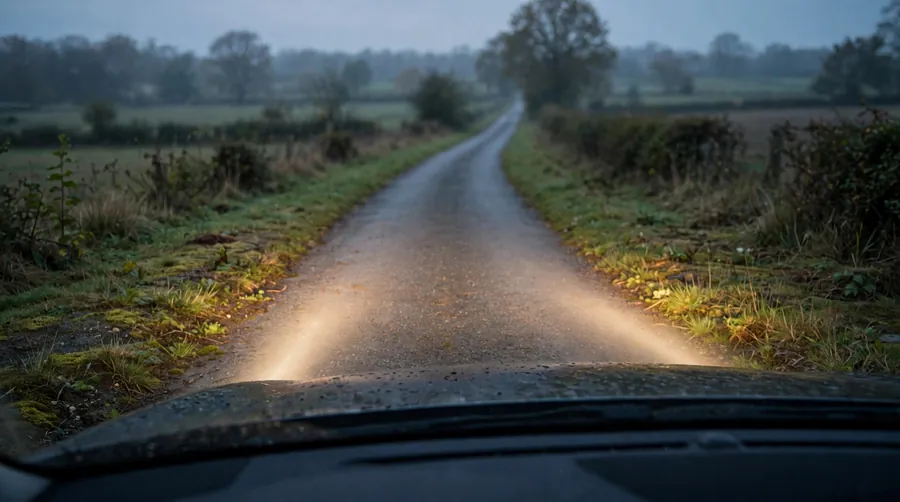
The question to sit with
It was flying low because that is how it hunts. It was hunting the verge because the verge is the best grassland left. It tried to go up because going up has always worked. And the strip that feeds it is the strip that kills it, with no way to separate the two.
Nothing about that was aimed at you. All of it was arranged by us, slowly, with good intentions, one tidy decision at a time.
So: which verge are you hunting, because the food is genuinely there — and when did you last look at the traffic?