
A dead crow stops you cold. You might be walking a quiet path, stepping into your yard, or driving to work when one catches your eye, and the small chill that follows is normal. Crows are loud, restless, hard to miss. One lying still pulls you up short.
If you came here for the seeing a dead crow spiritual meaning, start with this: it rarely points to danger or bad luck. Most readings treat a dead crow as an ending, a marker that something has run its course.
A living crow is all movement and noise. The dead crow spiritual meaning people reach for is the opposite: stillness, the sense that a cycle, a habit, or a hard chapter has closed. Read that way, the encounter works as a signpost rather than an omen. Something has reached its end, whether a long fight with a personal habit, a relationship that has run out of energy, or a way of thinking that no longer fits. The unease you feel is usually resistance to change, not a warning of it.
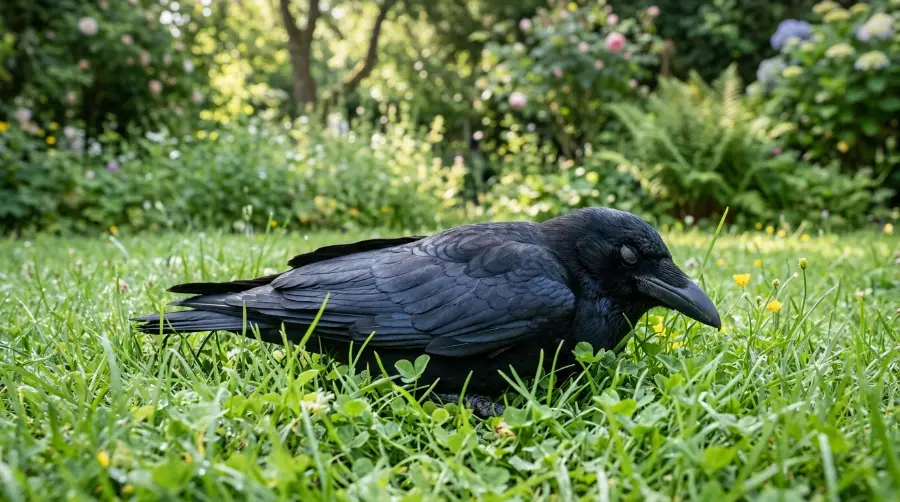
Why Crows Pay Attention to Their Dead
To make sense of the seeing a dead crow spiritual meaning, look at how the birds themselves behave. It is strange.
When a crow dies, others nearby gather around the body and raise a loud, agitated clamour. People call these gatherings “crow funerals.” The biologist Kaeli Swift, who studied this behaviour with John Marzluff at the University of Washington, found the birds are not mourning the way we do. They are investigating.
They want to know what killed the bird so they can avoid the same fate, and they remember the spot, and any predator near it, as dangerous for a long time after.
There is a clean lesson in that behaviour. Come across a dead crow and borrow the crow’s response instead of panicking: stop, look around, learn. Use it as a prompt to check your own situation for the risks and unhealthy patterns you have been driving past.
If work has left you exhausted, the honest move is to stop ignoring the stress and name what causes it. The point is awareness, and fear only gets in the way.
For a related reading, see the meaning of a crow appearing in a dream.
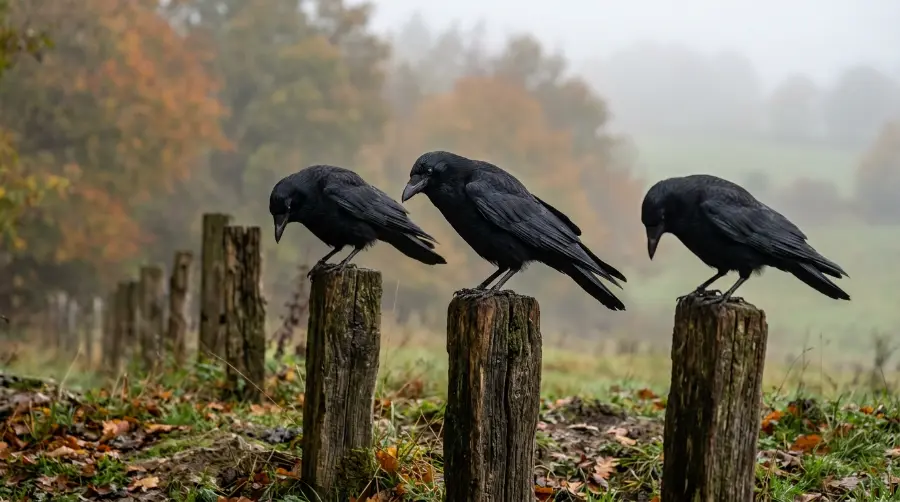
Spiritual Meanings of a Dead Crow
Look at the symbolism and a few readings surface again and again, most circling closure, honesty, and the people you keep close.
The End of a Toxic Cycle
People often read a dead crow as the end of an unhealthy habit or a repeating struggle. You get stuck in loops, negative self-talk, worry, the poor choices you have tried to break for months with little luck. The dead crow reads as a sign the energy feeding that loop has run out, which lets you start over without dragging the old pattern behind you.
Emotional Closure and Release
You can carry emotional debts for years: an old argument with a relative, guilt over a past choice, the wish that something long gone had gone another way.
The dead crow reads as those debts settling, the sense that a situation has ended and there is nothing left to fight, fix, or replay. Taken that way, it hands you permission to stop struggling and accept that the past is closed.
A Prompt to Reevaluate Your Circle
Crows are social birds that live in tight groups, so they tie neatly to community and communication. A dead crow can read as a break in your own circle, the end of a run of gossip, drama, or tension, or a nudge to look hard at who you spend time with. If a group of friends or coworkers has been draining you, the sign works as a cue to step back.
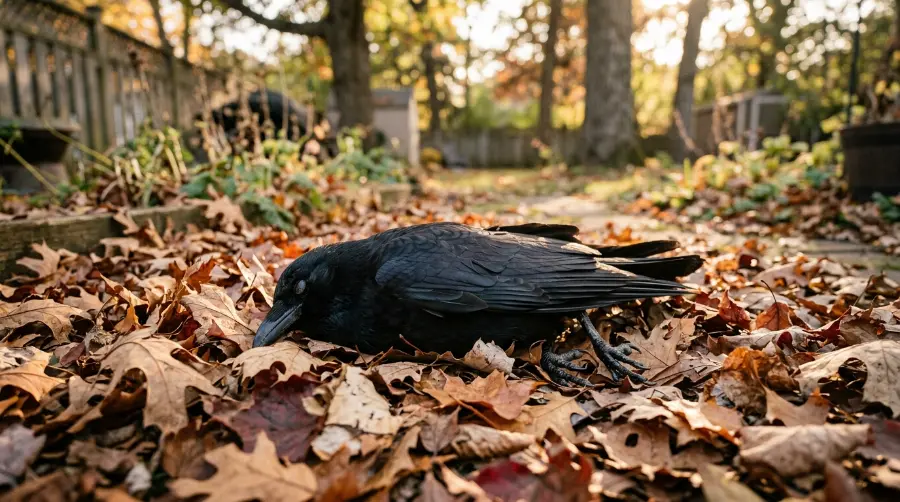
Common Dead Crow Encounter Scenarios
Where you find a dead crow, and how, shades the reading. These three situations come up most.
Finding a Dead Crow in Your Yard
Your home and yard stand in for your private life, family, and boundaries, so a dead crow on your property reads as something close. People link it to shifts at home: a long disagreement with a partner or relative settling, or a tense stretch in the household easing so a calmer mood can return.
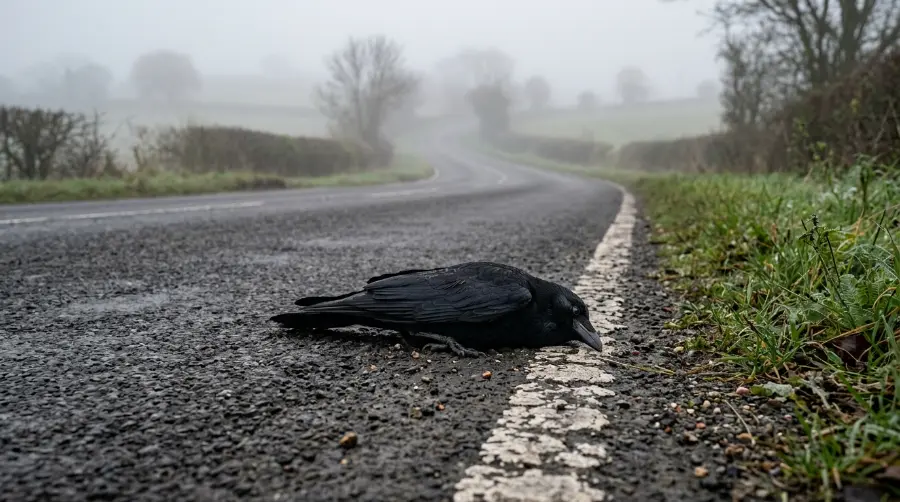
Seeing a Dead Crow on the Road
Find one while travelling or commuting and it maps onto your path and career, since the road stands for the journey toward your goals. The common reading is a hard stop to a current plan: a dead end rather than a failure, a cue to quit pushing that way and find a better route.
Finding Multiple Dead Crows
More than one is rare, and people read it as a heavier, structural message, a shift that touches a whole family, workplace, or community rather than you alone. The usual framing: an old way of doing things is clearing out to make room for something new, disruptive now but part of a larger reset.
What a Dead Crow Means for Your Life
The sign gets easier to use when you map it onto the area where you are facing a real decision.
In Relationships
In relationships, a dead crow tends to show up when a draining friendship or romance is winding down on its own. Maybe you have spent months trying to save a friendship you no longer share much with. The dead crow mirrors that, a connection out of life, and accepting it lets both of you move on without guilt.
In Career and Decisions
At work, a dead crow surfaces around a project, job, or business direction that has run its course, the idea you poured time and money into that is not working. The common reading is a cue to stop feeding a dead end: cut your losses, take the lesson, and point your skills somewhere with a future.
During Grief and Healing
If you are moving through grief, the dead crow reads as emotional release, the end of the heaviest stretch of pain. The sadness does not vanish on cue, but the sign says the sharpest part is behind you and it is time to rebuild.
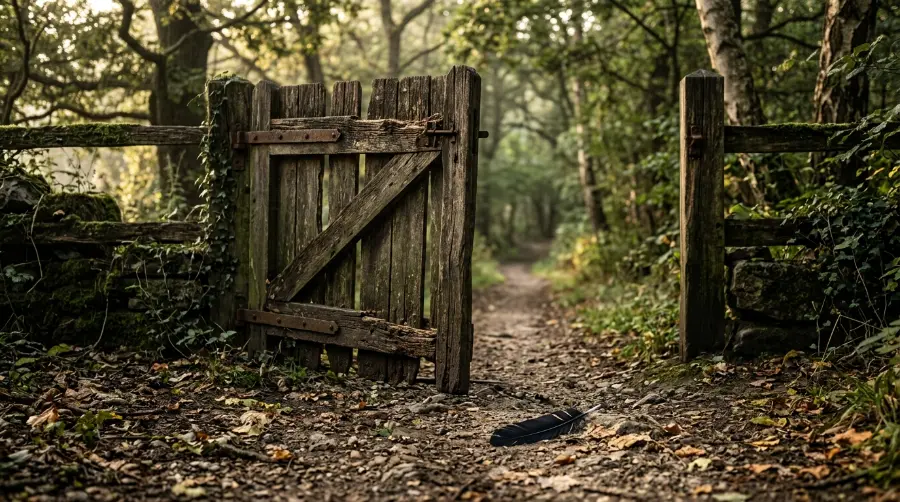
Is Finding a Dead Crow a Bad Omen?
Plenty of people worry that a dead crow is a bad omen, a fear rooted in old folklore that links crows to battlefields, illness, and death. Crows scavenge, so the popular imagination has tied them to the end of life for centuries.
Most modern reading treats it as a neutral sign of transition, not a curse. There is a real gap between what feels frightening and what does harm. A dead crow causes nothing; at most it reflects a change already under way. Read it as a marker that something old has finished rather than a warning that something bad is coming, and the fear tends to drain out, leaving room to notice what opens once a door closes.
What To Do After Seeing a Dead Crow
You do not need a ritual. A few plain steps are enough to process it.
Take a Moment to Pause
Borrow the crows’ approach. When they find a dead flock member, they stop and read the area. Give yourself a day or two to slow down and look at where you feel stuck, drained, or frustrated.
Identify What Needs to Be Released
Then name the habits, relationships, or projects that stopped working. A grudge, a dead-end job, a friendship that only takes. Admitting something has run its course is the first step toward letting it go.
Mark the Transition
Then find a simple way to mark the ending: a few lines in a journal, an honest talk with a friend, a firm decision to change one part of your routine. Closing the old door on purpose makes room for whatever comes next.
Frequently Asked Questions About Dead Crows
Is seeing a dead crow bad luck?
No. The bad-luck reputation comes from old folklore about crows scavenging near death, not from anything the sighting causes. Most readings treat a dead crow as a neutral sign of transition, the end of something rather than the arrival of misfortune.
What does it mean to find a dead crow in your yard?
Your yard stands for your private and family life, so a dead crow there reads as something personal, often the end of a household tension or the resolution of a long disagreement with someone close.
Do crows really hold funerals for their dead?
They gather and call around a dead crow, but research by Kaeli Swift and John Marzluff at the University of Washington suggests they are investigating the danger rather than mourning, learning what killed the bird so the flock can avoid it.
What should I do after seeing a dead crow?
Pause and look at where you feel stuck or drained, name the habit, relationship, or project that has run its course, and mark the ending in some small way. Use the encounter as a prompt for honest reflection, not a cause for worry.