
You are sitting in your room, or walking down a quiet street, when a harsh sound breaks the silence. A crow is cawing nearby. The call is sharp, sudden, and impossible to ignore.
Seeing a crow can pass as a quiet moment. Hearing one hits differently. The sound stops you mid-step, and most people feel a sudden urge to look around.
That reaction is why the crow’s call has drawn so much meaning over the centuries. It interrupts you, breaks your train of thought, and pulls your attention back to the world around you.
Three things are worth separating: what crows meant to the cultures that lived beside them, what science knows about their calls, and what people take from hearing one today.
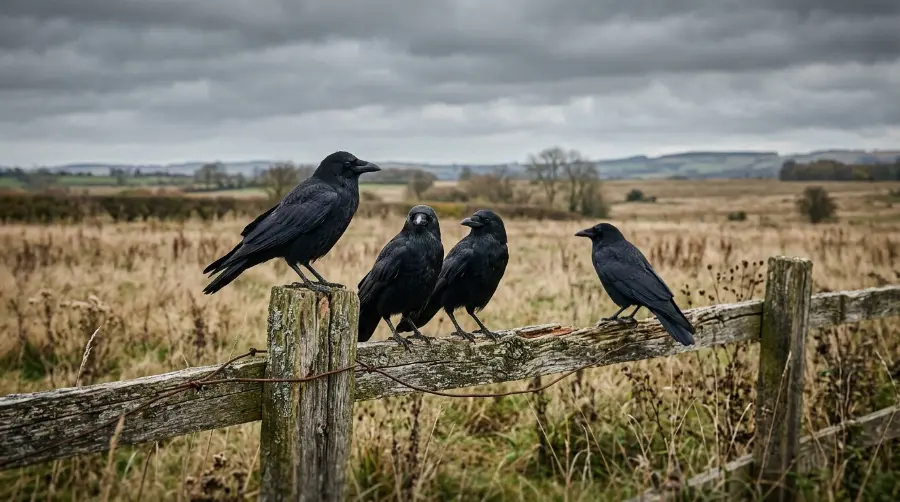
What Crows Have Meant Across Cultures
Few birds carry as much meaning as the crow, and the traditions run older and stranger than the “bad omen” reputation most of us grew up with.
In Hindu tradition the crow ties to ancestors. During the Shraddha rites that honour the dead, families set out rice-ball offerings, and a crow eating them signals that the offering has reached the departed.
Here the bird works as a messenger between the living and their forebears rather than a symbol of doom.
Norse mythology gave the god Odin two birds who flew across the world each day and returned to whisper what they had seen in his ear.
Their names were Huginn and Muninn, often translated as “thought” and “memory.” These were ravens rather than crows, but the two are close cousins in the same family, and folklore rarely kept them apart. The idea holds either way: the bird watches and sees what you cannot.
The Greeks linked the crow to Apollo, god of prophecy, and counted it among the birds watched for omens. One myth explains the crow’s black feathers. The bird was once white, the story goes, and Apollo scorched it dark for bringing him unwelcome news.
In Irish legend the war goddess Morrígan took the form of crows and ravens over battlefields. Across these different cultures the crow keeps landing in the same role: a bird bound to knowledge, fate, and the line between life and death.
None of these traditions agree on a single message. The reverence is real and documented. The neat one-line meanings you find online are not.
Spiritual Meanings of Hearing Crows
What is happening in your life shapes how you read a crow’s call. Three spiritual meanings of hearing crows come up most.
An Urgent Attention Sign
You go through life with your eyes half-closed to a problem, ignoring small issues to avoid dealing with them. The crow’s call is loud and rough by design, built to cut through quiet. That is why it reads as a nudge to wake up to something you have been avoiding. If you suspect a friend is not being honest with you but keep letting it slide, the caw is the jolt that makes you look at it.
Trusting Your Intuition
Crows survive on sharp instincts. When they sense something wrong, they call out at once rather than second-guessing. That is where the “trust your gut” reading comes from. You let outside noise, other people’s opinions, the endless scroll, drown out your first instinct, and the crow’s sharp sound reads as a reminder to listen to the unease you already feel about a decision.
A Warning of Hidden Obstacles
In the wild, crows act as sentinels. They perch high and watch, and when they spot a hawk or a cat they give a specific alarm call to warn the flock. So a caw often reads as a practical heads-up rather than bad luck. If you are about to sign a contract or start something big, take it as a prompt to double-check the details you skimmed over.
For related reading, see the dead crow spiritual meaning and the meaning of a crow appearing in a dream.
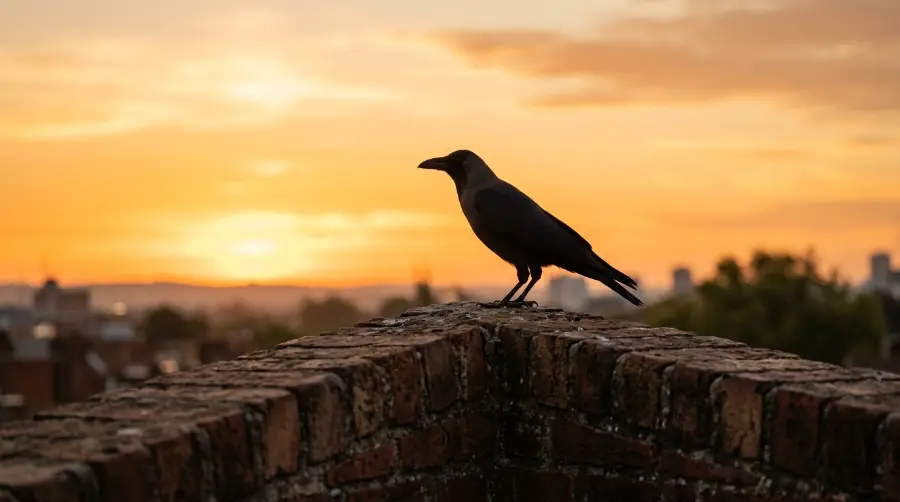
Meaning of One Crow Cawing
A single crow calling out feels more personal than a group. A flock caws as collective noise. One crow stands out and feels direct.
In nature a lone crow calls to locate its mate or mark its position, standing firm on a branch and making itself heard. People map that onto finding your own voice and holding your ground even when you feel alone.
Picture a meeting where everyone backs a plan you are certain will fail, and you are afraid to be the one who speaks up. A single caw in that moment reads as a small push to say it anyway.
Timing shapes the reading too. If you hear one crow while turning a problem over in your mind, the sound reads as a cue to trust your first instinct. The thought you had right after the caw is usually the one worth attention.
Common Crow Sound Scenarios
Where and when you hear a crow shades what people take from it. These situations come up most.
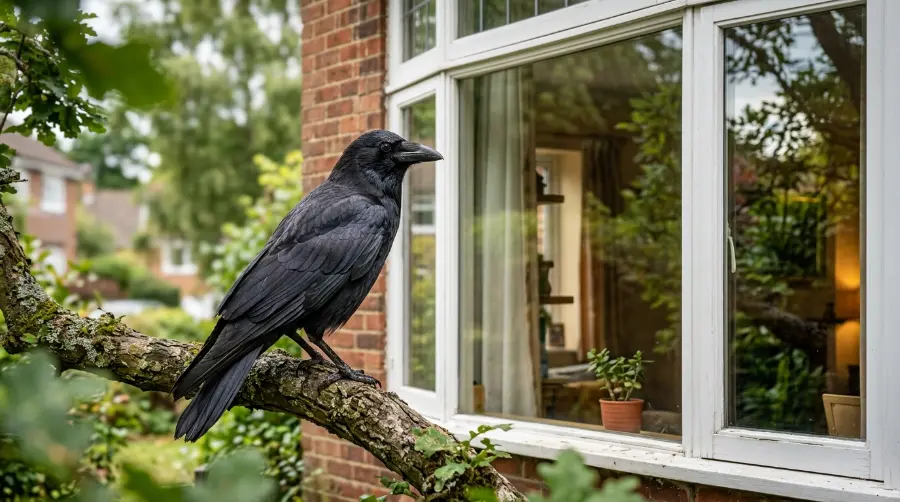
Hearing a Crow Outside Your Window
When a crow calls right outside your home, the reading turns inward, toward your private life. Home is your personal space, so a caw here ties to family dynamics, boundaries, or something close that needs attention. Maybe someone under your roof is crossing a line, or outside stress is seeping into your calm space.
Hearing Crows Early in the Morning
Morning is the shift from sleep into the day. You wake, grab your phone, and start in a rush. Hearing crows first thing reads as an invitation to do the opposite, to move through the day with your eyes open, noticing detail instead of running on autopilot. How you start sets the tone for what follows.
Hearing a Group of Crows Making a Racket
When crows gang up to harass a predator, biologists call it mobbing. They work together to drive off a threat. A loud group of crows reads as collective energy of that kind: a chaotic environment, a stressful workplace, a noisy family gathering, the pressure of everyone’s opinions at once. Taken that way, it is a cue to step back from the crowd and clear your head.

How to Apply This to Life
A sign earns its keep only when it changes something. People put the crow’s call to work like this.
In Relationships
You might be ignoring a red flag. A partner acting distant, a friend who only calls when they need something. You feel the quiet worry but let it slide to dodge trouble. The crow’s harsh call works as a reminder to speak up, because facing a hard truth now costs less than facing it later.
In Career Decisions
Plenty of people stay in jobs that drain them because change is frightening, ignoring the headaches and sleepless nights that pile up. A caw can serve as a prompt to take those signals seriously. It does not mean quit tomorrow. It means start looking, update the resume, and notice where you would feel valued.