
You walk into a quiet room and spot a small stone elephant on a shelf, trunk raised toward the ceiling. In the next room a wooden elephant points its trunk down at the floor. You might assume the carver picked a pose at random.
They did not. In the traditions these statues come from, the position of the trunk carries a specific meaning, and people have turned to elephants for luck and protection for centuries. If you want to bring one home, the direction of the trunk changes what the piece stands for, and the two readings differ in ways worth knowing before you choose.
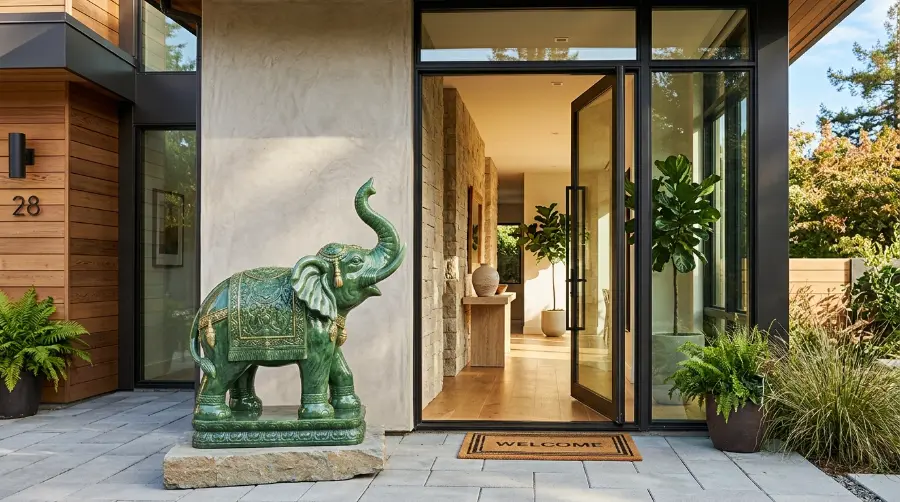
What Does an Elephant Trunk Symbolize?
The trunk is the elephant’s most striking feature. It holds no bones and an estimated forty thousand muscles, strong enough to uproot a tree yet fine enough to lift a single blade of grass. Elephants breathe, smell, drink, wash, and feed with it, and they also greet each other, comfort their calves, and warn off threats. When they swim, they raise it above the water like a snorkel.
The trunk is how an elephant reaches out and touches the world, so it became the focus of the animal’s symbolism. Elephants carry deep meaning across several cultures. Hindu tradition honours the elephant-headed god Ganesha as the remover of obstacles and the god of new beginnings, one of the best-loved figures in the pantheon, and much of the elephant’s link to luck and fresh starts traces back to him.
Feng Shui treats the elephant as a symbol of strength, wisdom, and protection, and this is where the beliefs about trunk position start. A raised trunk sends energy and good fortune outward. A lowered trunk pulls energy inward to store and protect it.
For a related tradition, see the white elephant spiritual meaning, which holds its own place in Thai and Buddhist culture.
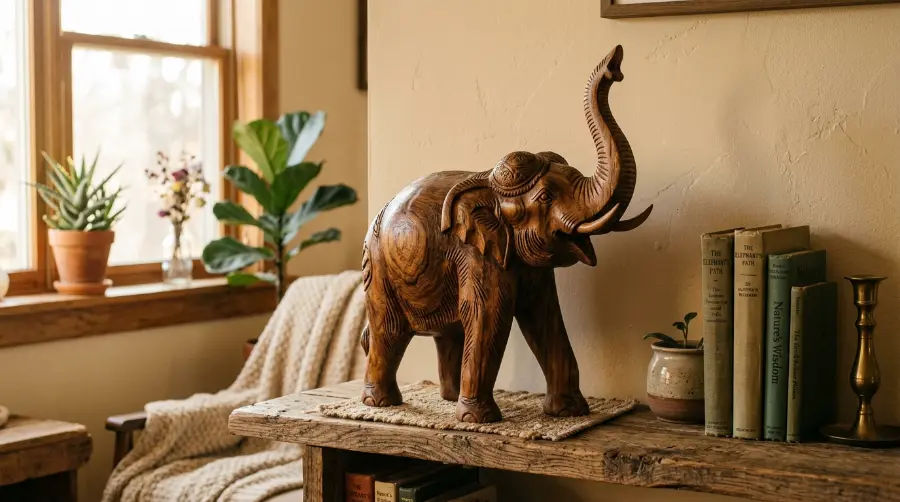
Spiritual Meaning of Elephant Trunk Up
In the wild, elephants raise their trunks to trumpet when they find water, rejoin the herd, or sense danger. It is a loud, outward, social gesture, and the raised-trunk statue echoes it.
That behaviour is why elephant trunk up symbolism ties to celebration, victory, and spreading joy. In Feng Shui the raised trunk works like a funnel that scoops good fortune from the air and showers it over the home, so people choose a trunk-up elephant to invite wealth, success, and positive change.
Starting a business or pushing for a promotion? The trunk-up elephant fits the moment. It stands for moving forward, staying positive, and sharing your success with the people around you.
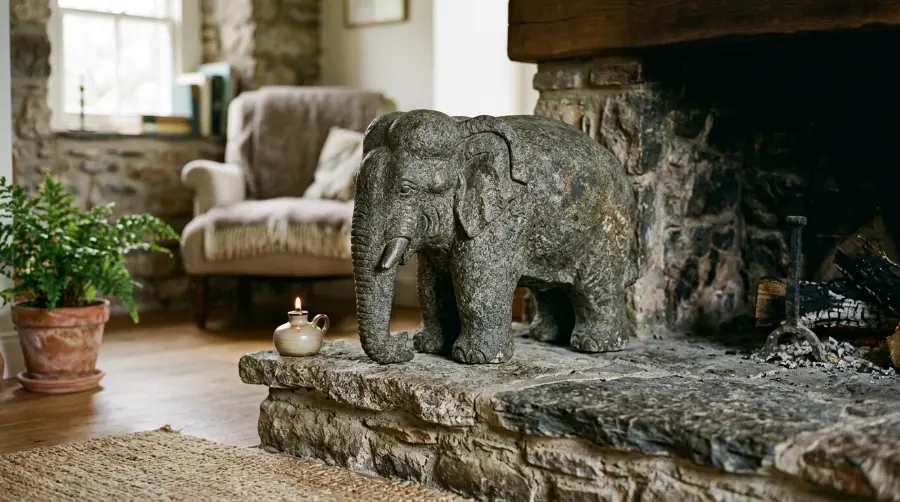
Spiritual Meaning of Elephant Trunk Down
People often mistake a lowered trunk for bad luck or sadness. That reading misses what the posture means.
In nature, elephants lower their trunks to drink, graze, and feel the ground. They can sense the low vibrations of a distant herd, or a coming storm, through their trunks and feet pressed to the earth. The posture reads as quiet focus and listening rather than defeat. So elephant trunk down symbolism stands for grounding, patience, and a strong foundation, holding your peace and protecting what you already have rather than sending energy out.
Moving through a stressful change, sitting with grief, or trying to steady a chaotic household? People choose the trunk-down elephant for that. It stands for the quiet strength it takes to hold steady when things are hard.
How to Choose the Right Elephant Statue
The right one comes down to what you need right now.
- Choose a trunk-up elephant if you want to invite opportunity, start a new project, meet new people, or bring more momentum into your life.
- Choose a trunk-down elephant if you want to lower stress, sleep better, protect your home, or focus on steadiness and self-care.
Material matters too, at least in the traditional logic. Heavy stone or clay suits the grounding feel of a trunk-down elephant, while polished metal or bright wood pairs with the lively energy of a trunk-up one.
Where to Place Your Elephant Statue
In Feng Shui, where you set the statue matters as much as which one you pick.
Facing the Front Door
Set a trunk-up elephant near the entrance facing inward to invite prosperity and fresh opportunity into the home. If you want protection instead, a trunk-down elephant facing out toward the door works as a guardian.
The Bedroom
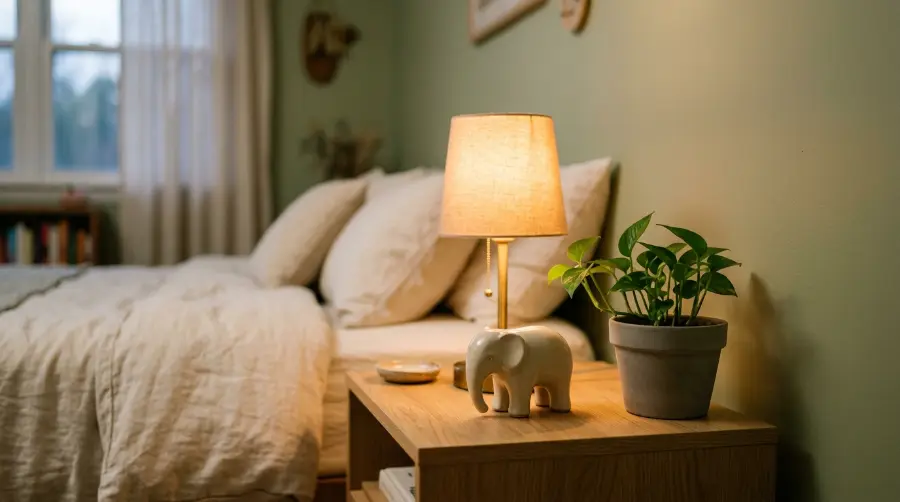
A trunk-down elephant suits the bedroom, where its grounding, settling energy supports rest and a peaceful relationship.
The Office
On a desk, people choose a trunk-down elephant for focus and long-term thinking. If your work runs on pitching and persuading, like sales, a trunk-up elephant brings outgoing, confident energy to the space.
Common Questions About Elephant Symbols
Which way should an elephant statue face for good luck?
In Feng Shui, you face an elephant into the home, often near the front door, to draw in luck and opportunity. To protect the household, you turn it outward toward the entrance so it acts as a guardian.
Is a trunk-down elephant bad luck?
No. That is a common misreading. A lowered trunk ties to grounding, patience, protection, and storing energy, not misfortune. People choose it for stability instead of the outward, celebratory energy of a raised trunk.
Can you display trunk-up and trunk-down elephants together?
Yes, and many people do. The two balance each other, one inviting new opportunities in and the other helping you hold onto them, which reads as harmony in the home.
What do two elephants with intertwined trunks mean?
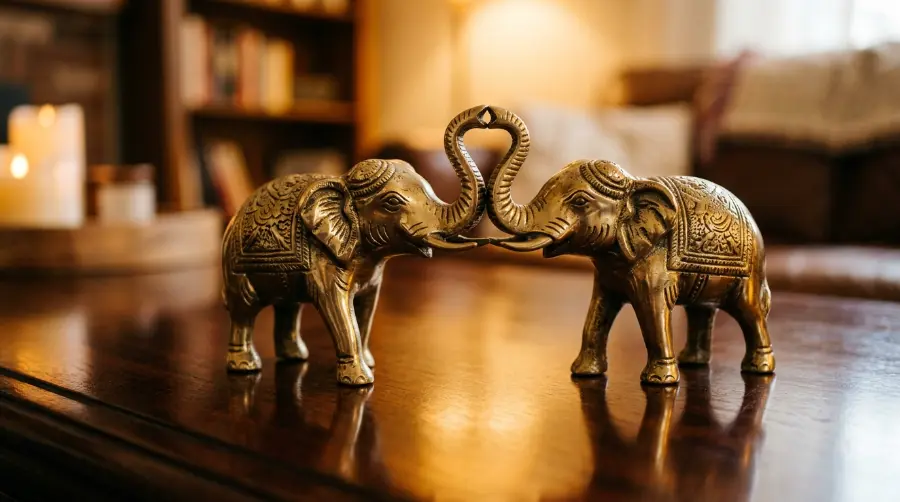
Intertwined trunks stand for friendship, love, and strong partnership, which is why these statues make popular wedding and anniversary gifts for couples and close friends.
Does the number of elephants matter?
In the tradition, a single elephant links to personal focus and strength, a pair to partnership and love, and three or more to family harmony and community. Whichever you pick, match the statue to what you most want to bring into your home.