
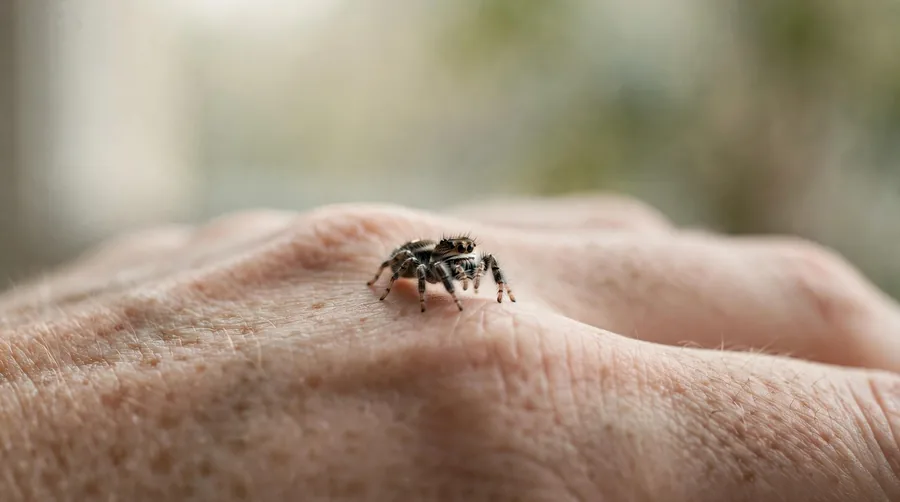
You felt it before you saw it. That light, precise, unmistakable sensation of something very small walking deliberately across your skin, and then the half-second of working out what it was and the involuntary movement that followed.
Then it was gone, or you brushed it off, and now you are wondering whether that meant something.
Every page you will find on this says the same handful of things: creativity, patience, transformation. What none of them mention is the detail that makes this encounter genuinely unusual. A spider walking anywhere does something with silk as it goes, and that means the one that crossed your hand did not just touch you. It left something behind.
What It Means When a Spider Crawls on You: In Short
A spider crawling on you is traditionally read as the most direct form of the spider’s message, because contact is treated as more personal than a sighting. The reading is about something being connected to you rather than shown to you — a thread attached, a situation you are now part of rather than watching.
It is not read as a bad omen in any major tradition. And practically, the spider did not choose you, is not hunting you, and almost certainly was not going to bite.
It Left a Thread on You
This is the fact that no other page on this topic uses, and it is the best thing about the whole encounter.
A spider on the move almost always trails a dragline behind it: a safety thread of silk, anchored at intervals to whatever it is walking across. It is a lifeline. If the spider falls, slips or needs to retreat, the dragline is what it falls on and what it climbs back up. Spiders do this more or less constantly while travelling.
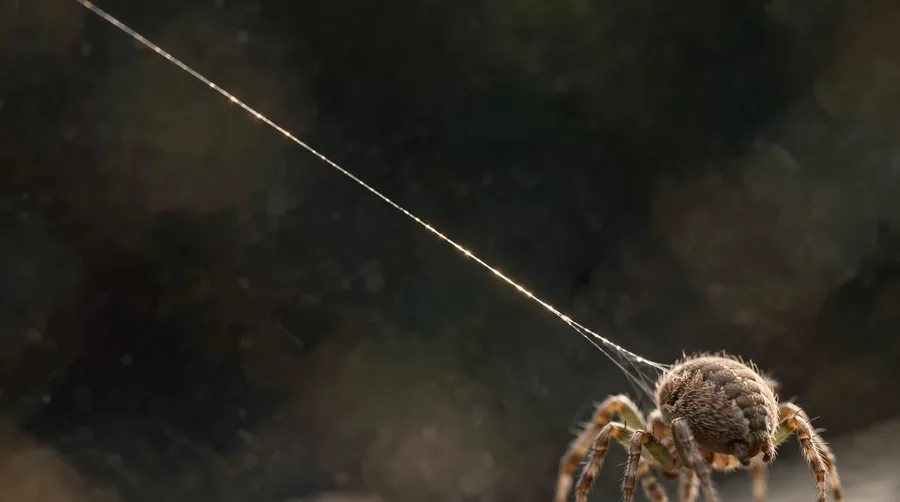
Which means that while that spider was walking across the back of your hand, it was anchoring silk to your skin as it went. When it left, the line went with it, trailing from wherever it last attached.
You were, very briefly and very literally, part of its structure.
Read that back as symbolism and it is far sharper than anything in the standard interpretations. Seeing a spider is being shown a web. Having one walk on you is being attached to one. The traditional reading of contact — that the message concerns something you are inside rather than something you are observing — turns out to describe exactly what physically happened.
So the question this encounter asks is specific. Not what are you building. What are you already connected to, by a thread you did not notice being attached?
Why It Was on You at All
Worth getting this straight before the meanings, because it changes how the encounter feels.
You are terrain, not prey. A spider has no concept of you. You are too large to register as an animal; you are a warm, slightly moving surface. It did not approach you, select you, or come to deliver anything. It walked off a chair arm, dropped from a door frame, or was already on your sleeve when you put it on, and then it kept walking because that is what it was doing.
It was reading you by touch. Spiders sense the world mainly through vibration and touch, using fine sensory hairs across their legs and body. Most have poor eyesight. So while it was on you it was doing the only thing it could do: feeling the texture, temperature and vibration of a surface it did not understand, looking for an edge.
There is something worth keeping in that. The encounter was not an inspection and not a threat. It was a small creature trying to work out where it was.
Unless It Was a Jumping Spider
One exception, and it is a remarkable one.
If the spider on you was small, compact, slightly fuzzy, moved in deliberate stops and starts rather than scuttling, and at some point turned to face you — that was a jumping spider, and it really was looking at you.
Jumping spiders have the best vision of any spider and some of the best eyesight of any invertebrate relative to body size. Their two large forward-facing principal eyes resolve genuine detail, and the retinas inside them can move to scan a target while the spider stays still. They hunt by stalking and pouncing, which requires actually seeing what they are aiming at. And they routinely rotate to track a large moving object, which is why they appear to make eye contact. They are, as far as anything that small can, watching you.
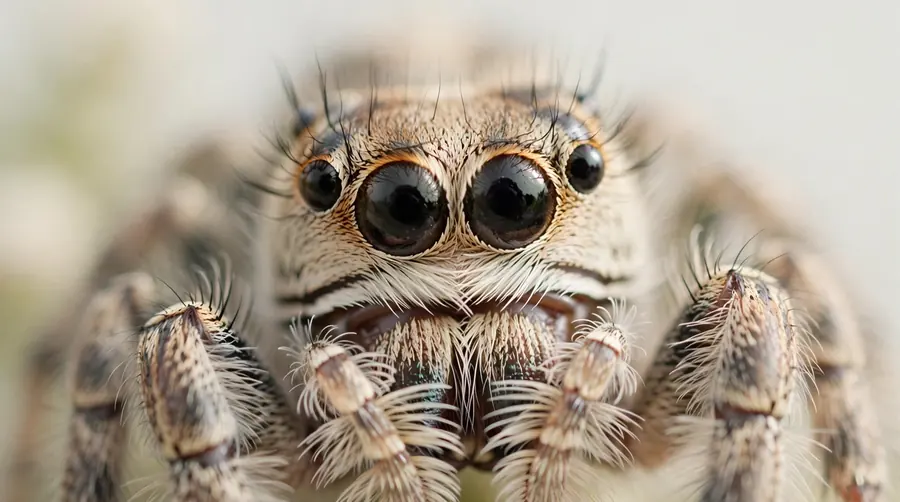
Symbolically this is the richest version of the encounter available. Of all the spiders that could have walked onto your hand, that is the one that registered you as something present. People describe jumping spider encounters as feeling like being greeted, and unusually, that impression is not entirely a projection.
Four Readings of a Spider Crawling on You
1. You Are Already Involved
The dragline reading, and the one most specific to contact. Something you have been treating as external — a situation at work, a conflict between other people, a decision you think you are merely observing — has you in it already.
Traditionally this is the reading given to any animal that touches rather than appears. A sighting is information. Contact means you are in the frame.
2. Creative Work Wants Your Hands
The spider is the maker, producing material from her own body and building with it, so contact is read as that impulse arriving at you directly rather than being demonstrated at a distance.
This reading is strongest if it crawled on your hand, which is the part of you that makes things. Standard interpretation: something you have been meaning to make, write, repair or start.
3. The Fear Was the Point
Be honest about your reaction. If a spider on your skin produced real revulsion rather than mild surprise, that response is part of the encounter and traditionally the most useful part.
A harmless thing touched you and your body reacted as though something serious had happened. The reading is not that your fear is foolish. It is a question about where else you are running a threat response that is larger than the threat.
4. Small Things Are Reaching You
The gentlest reading, and the one that fits a tiny spider best. Something very small made contact with something very large and the large thing noticed.
Read as a sign, it points at the small inputs you have been dismissing as too minor to matter: a remark, a recurring thought, a tiny symptom, a quiet preference. The scale of a message is not the measure of it.
Where on Your Body It Crawled
Placement is the layer people most want and competitors handle least. These are traditional associations, offered as a frame rather than a rulebook.
Your Hand or Arm
The most commonly reported, and read as the clearest version: hands are what you build and act with, so the message concerns work, craft and what you are doing rather than what you are feeling.

Your Leg or Foot
Read as direction and movement. The traditional interpretation concerns a journey, a departure, or a path you have been standing still on. Also the most common place to find one if you have been sitting outdoors, since legs are the nearest bridge from the ground.
Your Face or Neck
The most alarming and read as the most urgent, because the face is identity and the neck is the throat. The usual reading concerns speech: something unsaid, or something you have been saying that is not true.
Your Head or Hair
Read as thought and the mind, usually interpreted as something occupying your head that you have not examined. Spiders end up there often because hair catches a dragline from a doorway or branch, which is also where the sensation of something in your hair comes from long after the spider has gone.
Your Chest or Back
The chest is read as the heart and matters of feeling. The back is read as what is behind you: history, or something being carried out of sight. A spider on the back is also the one you did not see, which the traditional reading tends to emphasise.
Was It Going to Bite Me?
Almost certainly not, and the reason is worth knowing properly.
A spider walking across your skin has no reason to bite. Biting is for prey and for defence, you are neither, and a bite costs venom that takes time to replace. Nearly every spider’s response to a large animal is to leave.
The bites that do happen almost always happen the same way: the spider gets pressed against skin and bites because it is trapped with nowhere to run. Rolling onto one in bed, pulling on clothing it was sheltering in, putting on a shoe, or slapping at one on your arm. Which gives you the single most useful piece of advice on this page.
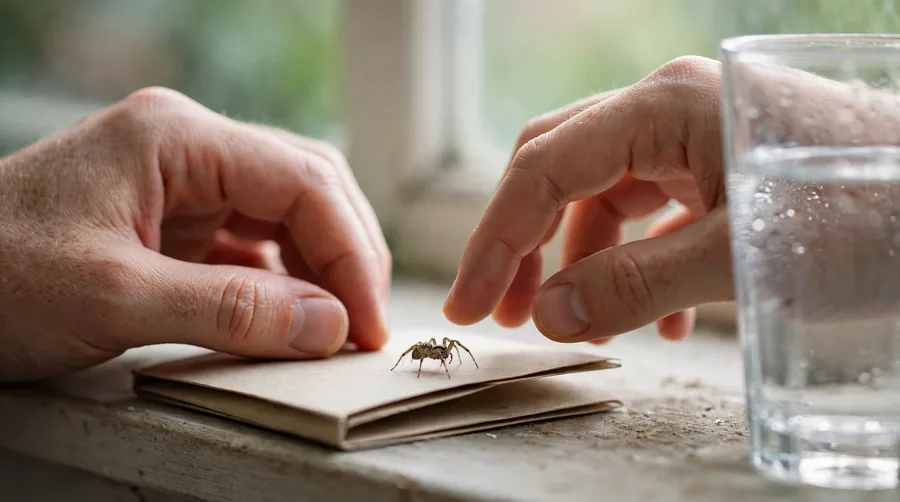
Do not slap it. Brush it off, or let it walk off. Slapping is the one action that converts a harmless encounter into the one outcome you were worried about.
If you were bitten, the symbolism shifts considerably and so does the practical advice — our guide to the spiritual meaning of a spider bite covers both.
While You Were Asleep
Two things to clear up, because both of them keep people awake.
Spiders do not crawl into your mouth while you sleep. You can let that one go entirely. A sleeping human is a warm, breathing, vibrating, carbon-dioxide-exhaling cave, which is exactly the combination a spider avoids. The widely repeated statistic about how many spiders you swallow per year has no research behind it at all; it circulated as a fabricated example of how easily false facts spread online, which is a fittingly ironic career for it.
The crawling sensation with nothing there is also a real thing. It has a name — formication, the feeling of insects moving on the skin — and the ordinary version is caused by nothing more than a hair shifting, a draught, dry skin, or your own heightened attention after an encounter. Once you have had a spider on you, your skin will report several more that evening. None of them will be real.
Traditionally, a spider making contact during sleep is read as the most significant version of the sign, because you were undefended and unable to choose the encounter.
What the Traditions Say About Contact
The spider is honoured more often than feared, which is not what most people expect.
In several Native American traditions, including Hopi and Navajo, a Spider Woman or Spider Grandmother figure appears as a creator and teacher associated with weaving. The details vary significantly between nations and are not one shared story.
In West African and Caribbean tradition, Anansi the spider is the trickster who wins by wit, and in many tellings the owner of all stories.
Across much of Europe a spider on your person or in your home was straightforwardly lucky. A small spider found on clothing was called a money spider in Britain and Ireland and was held to bring money, with the instruction to let it walk rather than remove it. If a spider crawled on you and you want the oldest Western reading available, that is it: you have been given good fortune and you should not brush it off.
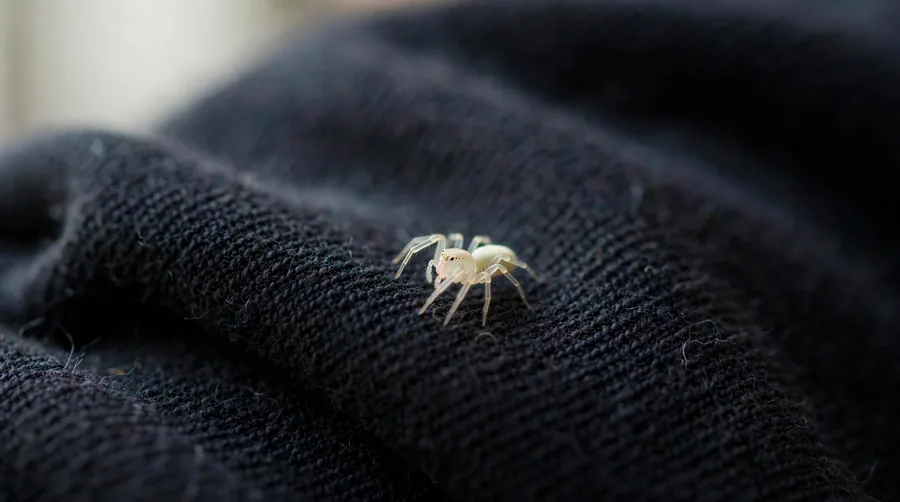
The folk rhyme makes the same point more bluntly — if you wish to live and thrive, let the spider run alive — and killing one was the part thought to invite trouble.
Greek tradition supplies the shadow: Arachne, the mortal weaver who out-wove Athena and was turned into a spider for her pride.
What to Do After It Happens
Brush, do not slap. Already said, worth saying twice, because it is the only part of this with any practical stakes.
Check your clothing if you have been outdoors. Most spiders that end up on skin arrive via a sleeve, a collar or a trouser leg, and finding it now is better than finding it later.
Note two details while they are fresh. Where on your body, and whether it moved in stops and starts and turned to face you. Those two answers decide which reading on this page is yours, and both fade within the hour.
Then the question. Not what the spider wanted, because it wanted an edge to climb down. The question is what you are already attached to that you have been describing to yourself as none of your business.
It walked across you trailing a line the whole way. That is the part worth keeping.
Frequently Asked Questions
What does it mean when a spider crawls on you spiritually?
Contact is read as the most direct form of the spider’s message, pointing at something you are connected to rather than something you are being shown. Because a travelling spider trails a silk dragline and anchors it as it goes, it literally attached a thread to you, which is why the traditional reading concerns involvement rather than observation.
Is a spider crawling on you good or bad luck?
Good, in most traditions. In Britain and Ireland a small spider found on your clothes was a money spider and thought to bring money, with the rule being to let it walk rather than remove it. Killing a spider, not encountering one, is the part folklore warns against.
Why did the spider crawl on me specifically?
It did not choose you. A spider cannot perceive you as an animal — you register as a large warm surface — so it almost certainly walked onto you from a chair, a doorway or your own clothing and continued because it was already moving. It was feeling for an edge, not investigating you.
Will a spider bite me if it crawls on me?
Very unlikely. Spiders bite prey and bite in defence, and you are neither prey nor worth the venom. Most bites happen when a spider is pressed against skin and cannot escape, which is why you should brush it off rather than slap it.
What does a tiny spider crawling on you mean?
Tiny spiders are read as small beginnings and as small things finally reaching you — the minor inputs you have been dismissing as too small to matter. In British folklore a tiny spider on your clothing is specifically a money spider and a sign of incoming money.