
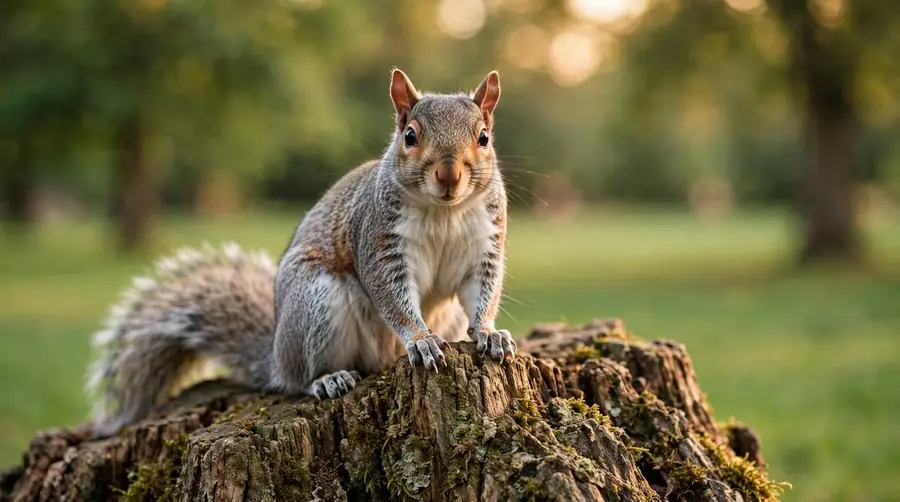
It sat up on its back legs, went completely still, and looked at you. Not for half a second, the way most animals glance before fleeing, but for long enough that you started to feel slightly self-conscious about it.
And it did not run. That is the part people remember.
The standard answer is that squirrels represent preparation, and that is true as far as it goes. But it skips something much better. The squirrel is, of all the animals you are likely to meet, the one most concerned with who is watching it — to the point that it will deliberately lie to an observer. So when a squirrel stops and stares at you, it is doing the thing it cares most about in the world: working out whether you are a witness.
Squirrel Staring at You: The Short Answer
A squirrel staring at you is traditionally read as a message about preparation and resourcefulness — a prompt about what you are setting aside, whether you have stored enough, and whether you are busy without being productive.
Because the encounter is eye contact rather than a sighting, it is read as the direct, personal form of that message. And the reason it feels like being assessed is that you were. Squirrels are habitual observers of observers, and the stare is a calculation about what kind of presence you are.
Why Squirrels Stare at People
Three real reasons, and they are not the same thing.
It Is Trying to Disappear
The one that surprises people most. A squirrel’s first line of defence is not running — it is going absolutely motionless, because movement is what most predators detect. Freezing flat against a trunk or standing rigid on the ground is a deliberate strategy, not panic.
So a squirrel holding perfectly still and facing you may not be confronting you at all. In its own estimation, it is hiding. There is something quite endearing in that: the intense, unblinking stare you found so meaningful was, from the other side, an attempt to become invisible.
It Can See You Without Looking at You
A detail worth knowing, because it changes how you read every squirrel you ever see again.
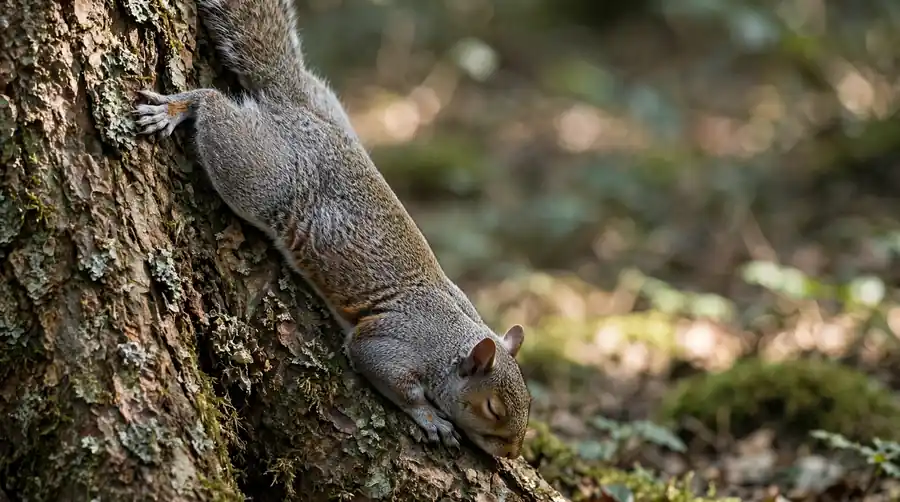
Squirrels’ eyes sit high on the sides of the head, which gives them an extremely wide field of view — wide enough that they can monitor a great deal of what is above and behind them without turning. It is the standard arrangement for an animal that is hunted from the air and from the ground at the same time.
Two consequences. First, a squirrel that appears to be staring directly at you is not necessarily focused on you — it may be tracking something else entirely while you happen to be in frame. Second, and more usefully: when a squirrel looks away, it is still watching you. Turning its head is not disengagement.
It Is Deciding What You Are
If the squirrel was in a park, a garden, or anywhere with regular human traffic, this is the likeliest explanation and it is genuinely about you.
Urban squirrels live among people constantly and adjust their behaviour to it. They keep much shorter flight distances than rural squirrels, they learn which situations have historically produced food, and they will sit and evaluate an approaching human rather than automatically fleeing. A park squirrel staring at you from two metres away is running a calculation: threat, irrelevance, or opportunity.
So the feeling of being sized up is accurate. You were being sized up.
The Animal That Cares Most About Being Watched
Here is the fact that makes this encounter worth more than the usual reading, and it is the heart of the article.
Squirrels are scatter-hoarders. Rather than keeping one larder, they bury nuts one at a time in thousands of separate places across a season, then find them again later using spatial memory and scent. The entire system depends on nobody else knowing where the nuts went — and squirrels rob each other’s caches constantly. Theft is not an occasional problem in squirrel life. It is the central economic risk.
Which has produced one of the more remarkable behaviours in any common animal. When a grey squirrel believes it is being observed, it will perform a deceptive cache: it goes through the full routine of digging a hole, pushing something in, and covering it over, while keeping the nut in its mouth the whole time. A complete, convincing, entirely fake burial, staged for the benefit of whoever is watching.
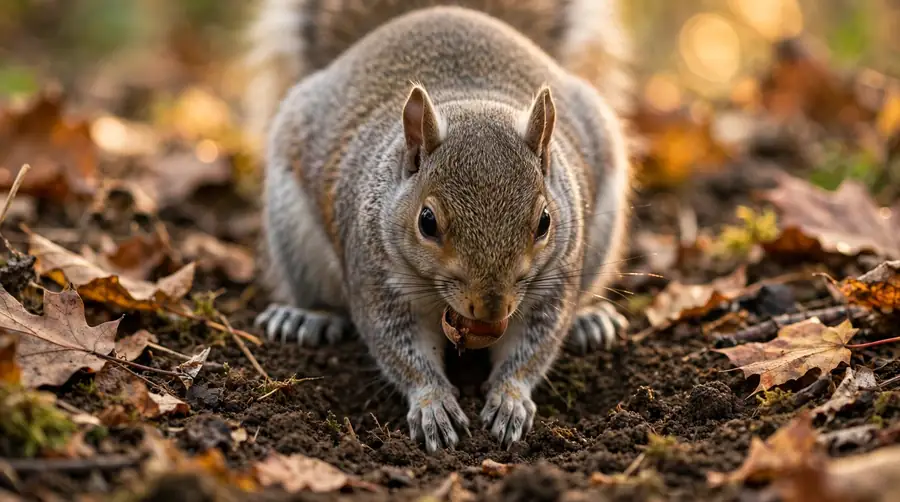
Think about what that requires. The squirrel has to notice it is being watched, care that it is being watched, and change its behaviour specifically to mislead the watcher.
This is the animal that stopped and stared at you.
Read it back as symbolism and the squirrel stops being a cute reminder to save money. It becomes the sign of concealment, surveillance and performed security. The squirrel’s whole life is an exercise in keeping stores hidden, watching who might be watching, and sometimes putting on a show of storing something it has not actually put away.
Which turns the preparation reading into a much harder question. Not “are you preparing?” but: are you actually preparing, or performing preparation? Is the thing you keep telling people you are building up genuinely in the ground, or still in your mouth?
Four Meanings of a Squirrel Staring at You
1. What You Have Actually Set Aside
The core reading, sharpened by the section above. The squirrel’s association with preparation is well earned — few animals work harder at putting things away for later.
But the version worth taking is the honest audit rather than the encouragement: money, time, energy, rest, goodwill. What is genuinely stored, and what have you only told yourself is stored?
2. Someone Is Paying Attention
Because the squirrel is the watcher-of-watchers, a stare from one is traditionally read as a message about observation: you are being noticed more than you think, or you are being more closely observed than is comfortable.
This reading tends to land for people in situations where they have been assuming privacy they do not have — at work, in a family, in something they have been quietly managing alone.
3. A Message Being Carried
There is an old and specific basis for this one, which the traditions section covers properly: in Norse mythology the squirrel is a courier, running up and down the world tree carrying words between the creature at the top and the creature at the roots.
Read as a sign, the squirrel is therefore a messenger rather than the message — the standard interpretation being that something is on its way to you, or that you are the one who has been carrying words between two parties who will not speak directly.
4. Nerve Out of Proportion to Size
Squirrels are small prey animals that routinely hold their ground against things vastly larger than themselves, scold predators from branches, and raid feeders built specifically to defeat them.
The reading is straightforward and usually welcome: the situation in front of you is bigger than you are, and that has very little to do with whether you can handle it.
What the Forgotten Nuts Become
One more fact, and it is the gentlest reading available here.
Squirrels do not recover everything they bury. A meaningful share of those thousands of individual caches is simply never retrieved — forgotten, abandoned, or left behind when the animal dies.
Those nuts are seeds. Buried at exactly the right depth, in loose soil, away from the parent tree. Squirrels are one of the principal reasons oak and hickory woodland regenerates and spreads at all, and they do it entirely by accident. The oaks are built out of the squirrel’s failures of memory.
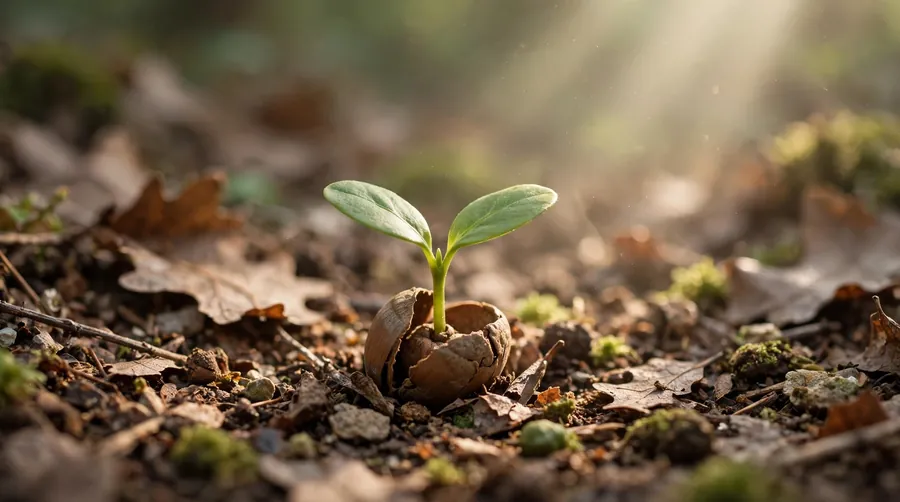
Read as a message, that is unusually kind. Not everything you set aside is going to come back to you, and some of what you lose track of turns into something you never intended and will not be around to sit under. The squirrel does not plant the forest on purpose. It plants it anyway.
What Changes the Reading
It Stared and Did Not Move at All
The freeze response, so read as a message about stillness and waiting rather than action. Traditionally interpreted as a prompt to hold position in a situation where you have been feeling pressure to react.
It Came Closer While Staring
Read as the boldest form of the sign, and the one most often reported as feeling deliberate. Practically, this is a habituated squirrel that associates people with food. Both things are true at once, and the second does not cancel the first.
It Chattered or Barked at You
Worth correcting, because people find this flattering and it is not. Those sharp repeated calls are alarm calls, and if it is looking at you while making them, you are the alarm. The squirrel is announcing you to the neighbourhood.
Symbolically that is read as a warning rather than a greeting — not of danger to you, but as a prompt about something you are approaching too closely or too carelessly.
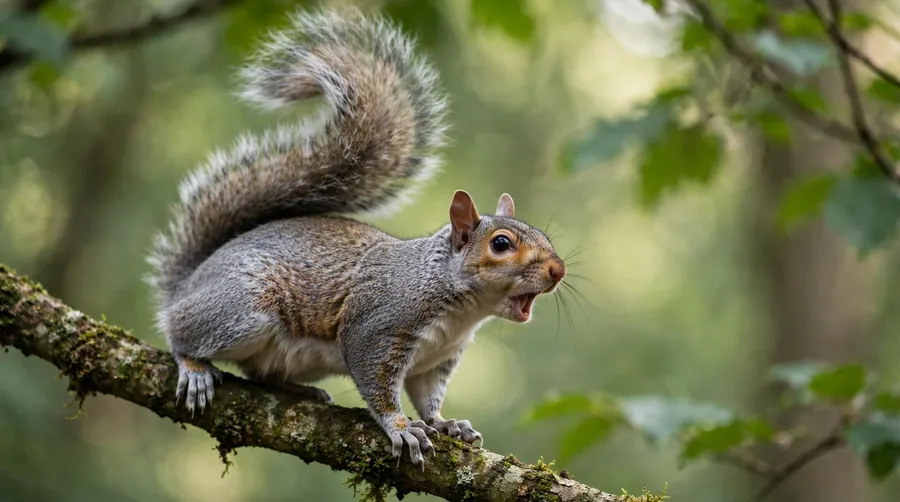
It Flicked Its Tail Repeatedly
Tail-flagging is a signal, generally read by biologists as a way of advertising to a predator that it has been spotted — the squirrel equivalent of “I can see you, do not bother.” It is sometimes also directed at other squirrels in a territorial dispute.
So a staring, tail-flicking squirrel is telling you it knows you are there. Which is a rather good fit for the observation reading above.
A Black Squirrel
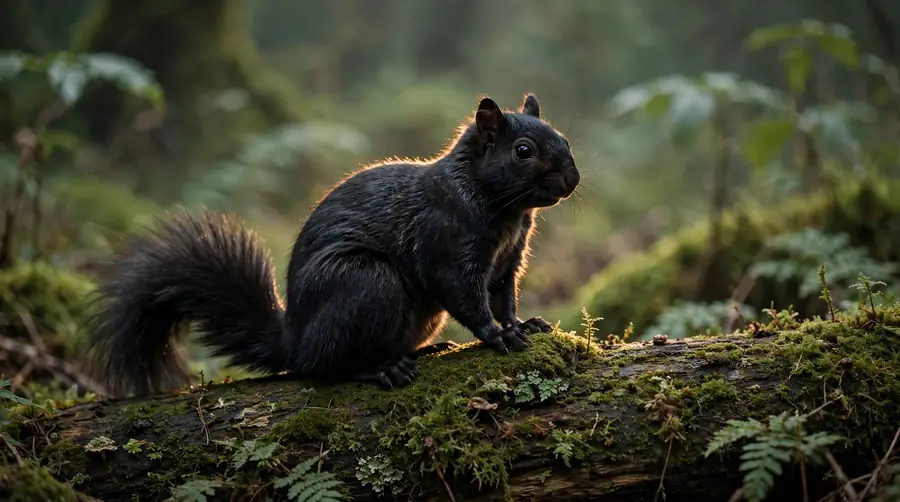
Read as the most significant colour variant: hidden knowledge, mystery, something not yet brought into the open. Black squirrels are colour variants of ordinary grey or fox squirrels rather than a separate species, and in some areas they are locally common while in others they are a genuine rarity — so how remarkable your sighting was depends entirely on where you live.
A White Squirrel
Rare, and read accordingly — guidance, spirit, a message of unusual weight. Some are albino and some are white-coated animals with normal dark eyes. A few towns are known for their resident white squirrel populations and treat them as local mascots, which is its own kind of folklore.
It Keeps Happening
Repetition is read as emphasis in nearly every sign tradition: the message was sent again because it was not received. Practically, squirrels hold small home ranges and you are almost certainly meeting the same individual, who has worked out that you are harmless.
Why It Happened Now
Timing explains more of these encounters than people expect.
Autumn is caching season, and it is when squirrels become most visible, most single-minded and most tolerant of people. An animal with a limited window to bury a winter’s worth of food will accept a human standing nearby rather than abandon the work. Most staring encounters happen now, and the seasonal reading is pointed: it is the season of putting things away, and you met the animal doing it.
Late winter and early spring is mating season, which is when you see the chases — several squirrels tearing through the branches in what looks like chaos. If your encounter came with that as the backdrop, the reading shifts toward pursuit and competition rather than storage.
Summer squirrels are often females with young in a nest nearby, which makes a bold stare more likely to be defensive than curious. Give those ones more room.
The Squirrel Across Traditions
Honest note first: the squirrel has a thinner symbolic record than animals like the wolf or the owl, and any page offering you an ancient universal squirrel tradition is improvising. What does exist, though, is good.
Norse mythology has the best of it by a distance. A squirrel named Ratatoskr runs up and down Yggdrasil, the world tree, carrying messages between the eagle perched at the top and the serpent Nidhogg gnawing at the roots — and in the telling, the messages are insults, which makes the squirrel less a postal service than a gossip stirring up a feud between two creatures who will never meet. A courier, a mischief-maker, and the only creature in the story that travels the whole height of the world.
Across various Native American traditions the squirrel is associated with thrift, gathering and energetic industry, and in some accounts with being a noisy gossip as well. The specifics differ considerably between nations and should not be presented as one shared belief.
In Chinese and Japanese decorative tradition the squirrel paired with grapevines is a recurring motif associated with abundance and fruitfulness, appearing on ceramics and textiles for centuries.
And on the biblical question, which people do search: there is no squirrel anywhere in the Bible. Not one mention. If you want the scriptural version of this animal’s message, the closest thing is the ant of Proverbs, which stores its provisions in summer and is held up precisely as the model of preparing while you can. Any page quoting you a Bible verse about squirrels has invented it.
What to Do
Do not feed it, and the reasons are better than you would guess. Fed squirrels lose their wariness, which gets them killed by cars and dogs. Bread and processed food are genuinely bad for them. Concentrating them at feeding spots spreads disease. And a habituated squirrel will bite a hand that approaches without food, which is the most common way people get hurt by them.
Do not try to touch it. Including the very tame ones. Especially the very tame ones.
Then note the season and the behaviour. Autumn or spring, frozen or approaching, silent or chattering. Those three details pick out which reading above is yours.
And then the question the squirrel is actually built to ask. Not whether you are preparing — almost everyone thinks they are. Whether the thing you believe you have put away is genuinely in the ground.
Frequently Asked Questions
What does it mean when a squirrel stares at you?
It is traditionally read as a message about preparation and resourcefulness, delivered directly because the encounter involved eye contact rather than a passing sighting. The deeper reading concerns concealment and observation: squirrels are intensely focused on who is watching them, so a stare is read as a prompt about what you are keeping hidden and what you have genuinely set aside.
Why do squirrels stare at you?
Three reasons. It may be freezing to avoid detection, since immobility is a squirrel’s first defence and it genuinely believes it is hiding. It may not be looking at you at all, because their eyes are set high and wide and they can watch things without facing them. Or, if it is a park or garden squirrel, it is assessing whether you are a threat or a source of food.
Is a squirrel staring at you good luck?
Yes, it is read as a positive sign in essentially every tradition that mentions squirrels. They carry almost no negative symbolism anywhere, with the readings clustering around abundance, industry, preparation and messages arriving.
What does it mean when a squirrel chatters at you?
That is an alarm call, not a greeting — the squirrel is announcing you as a potential threat. Symbolically it is read as a warning rather than a welcome, usually interpreted as a prompt about something you are approaching too closely or too carelessly.
Do squirrels recognise individual people?
Urban squirrels clearly learn which situations and locations produce food and adjust how close they allow people to come, and anyone who has fed one regularly will tell you it behaves differently toward them. If the same squirrel keeps staring at you, it has at minimum learned that you are not dangerous.