
You found it in the garden, or at the edge of the drive, or on the grass near the back step. And whatever you expected to feel, what you actually felt was unsettled — because it is a small soft animal and because some part of you immediately wondered whether it was meant for you to find.
Let me take the worst of it off the table straight away. There is no tradition anywhere — not in European folklore, not in the omen literature, not in any of the religious frameworks people search for — that reads a dead rabbit as a warning about a person’s death. The animals that carry that reputation in Western folk belief are birds. The rabbit has essentially no ominous tradition attached to it at all.
What it does have is something more interesting, and it comes from the one fact about rabbits that explains everything else about them.
Seeing a Dead Rabbit: The Short Answer
A dead rabbit is traditionally read as a cycle closing rather than a curse arriving — the end of a particular stretch of growth, a false start, or something that was multiplying and has stopped.
The deeper reading, which no other page gives you, is that the rabbit’s famous fertility and its enormous mortality are the same single adaptation. Rabbits breed the way they do because they die the way they do. So a dead rabbit is not the opposite of the lucky rabbit. It is the other half of the same animal, and it is what the abundance costs.
Why This Is the Most Ordinary Dead Animal to Find
This is the part that defuses most of the unease, and it deserves saying properly rather than as reassurance.
The rabbit is the textbook prey animal. It is eaten by foxes, hawks, owls, buzzards, coyotes, weasels, stoats, snakes, domestic cats and dogs. It is killed by cars in enormous numbers. It is vulnerable to several serious diseases. And it has no meaningful defence beyond detection and speed.
The result is that the overwhelming majority of wild rabbits die within their first year. A wild rabbit that reaches two is an old rabbit. Most never get near it.
So finding a dead rabbit is statistically the least remarkable dead animal encounter available to you. If you live anywhere near grass, it was always going to happen eventually.
That is not meant to make the moment smaller. It is meant to answer the specific question “why was this shown to me,” which for a lot of readers is the thing actually generating the dread. The answer is that it was not singled out for you. You walked past something that happens constantly and usually out of sight.
The Fertility and the Death Are One Thing
Here is the fact that turns this from a sad find into a genuinely useful sign, and it is the heart of this page.
Everyone knows rabbits breed prodigiously. Female rabbits ovulate in response to mating rather than on a fixed cycle, gestation runs about a month, and a doe can conceive again within hours of giving birth. The phrase “breeding like rabbits” is a technical description, not a joke.
What almost nobody connects is why. That reproductive rate is not exuberance. It is compensation. An animal at the bottom of the food web, with almost no defences and a life expectancy measured in months, survives as a species by producing young faster than they can be removed.
Some animals take the other strategy. An elephant invests enormously in one calf over years and protects it. A rabbit invests lightly in very many and protects almost nothing. Neither is better. They are two solutions to the same problem.
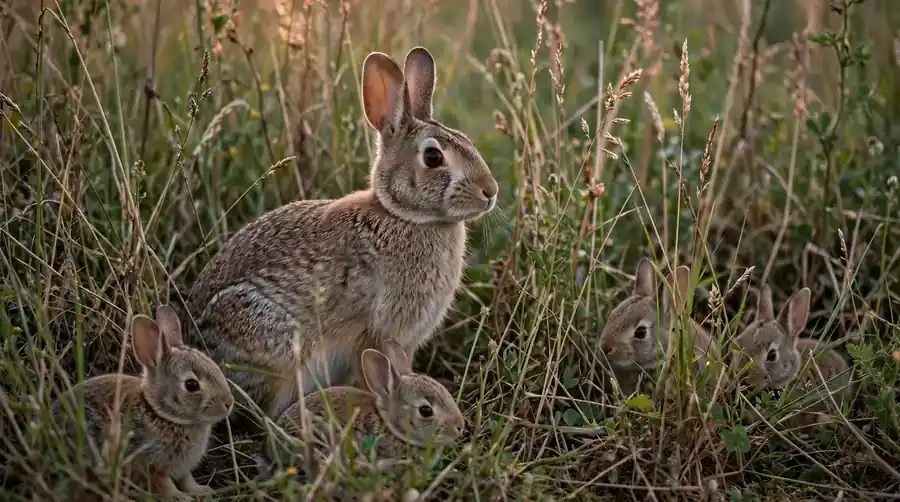
Which means that for a rabbit, individual death is not a failure of the strategy. It is an assumed input to it. The multiplication exists in order to absorb the losses. You cannot have one without the other; they are the same adaptation seen from two ends.
So read your encounter back through that. If a pair of rabbits is a sign of abundance beginning — and it is, across almost every tradition that knows the animal — then a dead rabbit is not that sign reversed. It is the price of that sign, which was always included.
The honest reading is therefore not “your luck has ended.” It is closer to this: something in the middle of growing has been lost, that loss was part of the arrangement rather than a verdict on it, and the growth continues. Rabbits do not stop. That is the entire point of a rabbit.
Four Readings of a Dead Rabbit
1. A False Start, Not a Failure
The most commonly applicable reading. Something had begun — a plan, a connection, an opportunity — and it did not establish.
The rabbit frame matters here because rabbits lose litters routinely and breed again the same month. The traditional interpretation is not that you chose wrongly. It is that not every beginning takes, and the response to one that did not is another beginning rather than an inquest.
2. A Defence That Has Stopped Working
If you found it on or beside a road, this one is pointed, and it is built on something real.
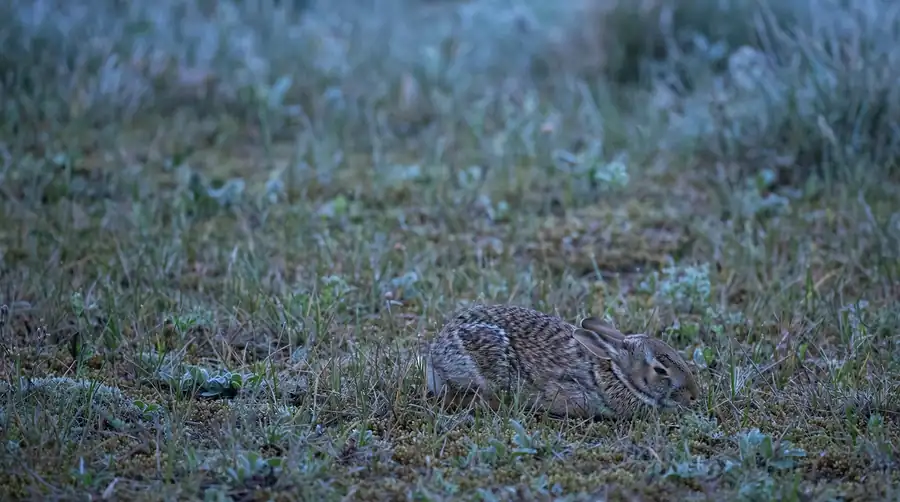
A rabbit’s first response to danger is to freeze. Against a hawk or a fox that is excellent — stillness defeats the motion-detection those predators hunt by, and it has worked for millions of years. Against a car it is lethal. The rabbit in your headlights is running the correct ancient program in an environment that program was never written for.
Read as a message, that is one of the sharpest things in animal symbolism. You may be using a strategy that genuinely used to protect you, in a situation where it no longer does. Going still, going quiet, waiting it out — these were not wrong. They may simply be answers to a different problem than the one in front of you.
3. Vulnerability Named Plainly
The rabbit is soft, small, defenceless and everyone’s food. A dead one is the most uncomplicated image of fragility most people will encounter in an ordinary week.
The traditional reading is not a warning about danger to you. It is an invitation to be honest about something you have been carrying as though you were not affected by it.
4. The Cycle, Including the Ugly Part
Rabbits are not only prey in the abstract. They are, in a direct and literal sense, how the energy of grass becomes the energy of foxes and hawks and owls. A dead rabbit is a transfer in progress.
Read symbolically, this is the reading people reach for when they talk about transformation, and it is more concrete than the usual version. Nothing is being wasted. Something is being converted into something else, which is uncomfortable to look at and is not the same as loss.
If It Was Your Pet Rabbit
A real share of people reading this are not looking at a wild animal in a field. You lost a rabbit you kept, possibly suddenly, and you are searching for meaning partly because you are searching for an explanation.
There is something you should know, and it is the most useful thing on this page.
Rabbits conceal illness deliberately. They are prey animals, and in the wild an animal that visibly shows weakness is the one selected out of the group. So a sick rabbit’s instinct is not to signal distress — it is to behave as normally as it possibly can, for as long as it possibly can. The behaviour is hardwired and it does not switch off in a hutch or a living room.
Which means that when a rabbit owner says “there were no signs,” they are usually right. There were not. Not because they were missed, but because the animal was built to hide them.
Rabbits also die fast once something does go wrong. Their digestive systems must keep moving constantly, and when gut movement stops the decline can be very rapid — often inside a day, and often presenting as nothing more specific than a rabbit that has gone quiet and stopped eating. And they are acutely vulnerable to shock and to heat.
If you have been going back over the last few days looking for the moment you should have noticed, please take this seriously: you were up against an animal whose entire evolutionary inheritance was dedicated to making sure you did not notice. That is not negligence on your part. It is the rabbit being a rabbit, right to the end.
And if you are looking for a sign in it, the gentlest true one available is in the section above. The animal that hides its suffering is the same animal that begins again faster than anything else of its size. Both of those are the rabbit.
What to Do With It
Nobody else writing about this covers the practical part, and some of it genuinely matters.
Do not handle it with bare hands. Wild rabbits and hares can carry tularemia, sometimes called rabbit fever — a bacterial infection that can be transmitted to people through handling an infected carcass, and which is a genuine though uncommon risk. They also carry fleas and ticks, which leave the body looking for a new host. Use a shovel, or invert a plastic bag over your hand like a glove, then double-bag it.
Keep dogs and cats away from it. For the same reasons, and because a dog that rolls on or eats a carcass brings all of that indoors.
If you keep pet rabbits, be careful about what you track inside. Rabbit haemorrhagic disease is extremely contagious, can kill domestic rabbits very quickly, and survives on shoes, clothing and tools. If you have found a dead wild rabbit on your property and you also have rabbits indoors, change your shoes and wash your hands before going near them, and talk to your vet about vaccination if you have not already.
Several dead rabbits with no visible injuries is worth reporting. That pattern can indicate a disease outbreak rather than predation, and in many regions local wildlife or agriculture authorities want to know. One rabbit with obvious wounds is a fox or a cat doing its job. Three or four intact bodies in a week is information.
Burial is fine in most places, reasonably deep and away from water sources and vegetable beds, or you can bag it and put it in household waste where local rules allow. If it is on a road and it is not safe to reach, leave it.
Where You Found It Changes the Reading
On Your Doorstep or Porch
The placement that unsettles people most, because it feels deliberate. It usually was deliberate — just not by anything symbolic.
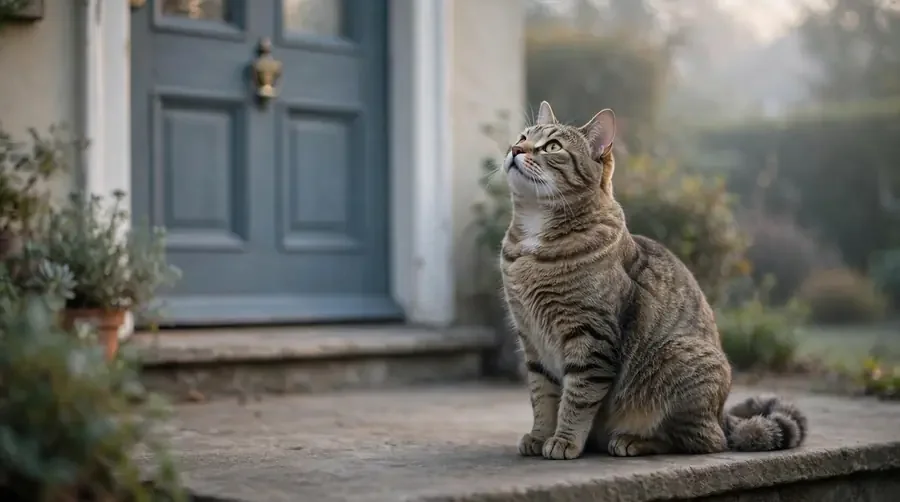
A rabbit on a doorstep is, in the great majority of cases, a cat’s doing. Cats carry prey back to the place they consider safe and central, and they frequently leave it at an entrance rather than eating it. It is not a gift and it is not a message; it is a cat storing food at what it regards as home base. Hawks and owls also drop prey while carrying it, which accounts for some of the rest.
Read symbolically, the threshold placement does carry weight — something ending right at the boundary of your home, so the reading tilts toward domestic and family matters. But if there is a cat in your neighbourhood, you have your explanation.
In Your Garden or Yard
Read as pointing at home and household rather than at your path. Practically, your garden has food and cover, which means it has rabbits, which means predators visit it.
On the Road
See reading 2 above, which is the one built for this. The freeze response is the correct answer to the wrong question.
A Nest of Dead Baby Rabbits
Distressing and sadly common, and usually explained by a cat, a dog, or a lawnmower. Nests are shallow scrapes in open grass, almost invisible, and they are destroyed by mowing constantly.
The practical note that actually prevents this: in spring, walk your lawn before you mow it and look for a patch of grass and fur that seems oddly tufted. If you find one, mow around it for a couple of weeks. Young rabbits leave the nest very quickly.
Read symbolically, this is the hardest version of the sign and also the most straightforwardly about fragility rather than fate.
A Dead White Rabbit
Almost certainly somebody’s abandoned pet, because there are essentially no wild white rabbits. A released domestic rabbit cannot camouflage, has no warren and does not know how to find wild food, so it rarely lasts long. Our guide to seeing two bunnies covers that in more detail, including what to do if you find a live one.
Read as a sign it carries extra weight, because white animals are treated as messengers in most traditions. Read practically, it is a small tragedy of human carelessness rather than a message.
Dreaming of a Dead Rabbit
Generally read as anxiety about something vulnerable in your care or about a plan you are afraid will not survive. Dream material is personal and resists fixed interpretation, so treat any page offering a single definitive answer with suspicion.
The Hare That Died and Became the Moon
The dead rabbit has very little folklore of its own. But there is one tradition that fits this exact subject better than anything else in the symbolic record, and it is worth knowing.
A Buddhist story tells of a hare who met a starving traveller and, having nothing to give, offered his own body — leaping into a fire so the traveller could eat. The traveller was a god in disguise. In recognition, he drew the hare’s image on the face of the moon, where it remains.
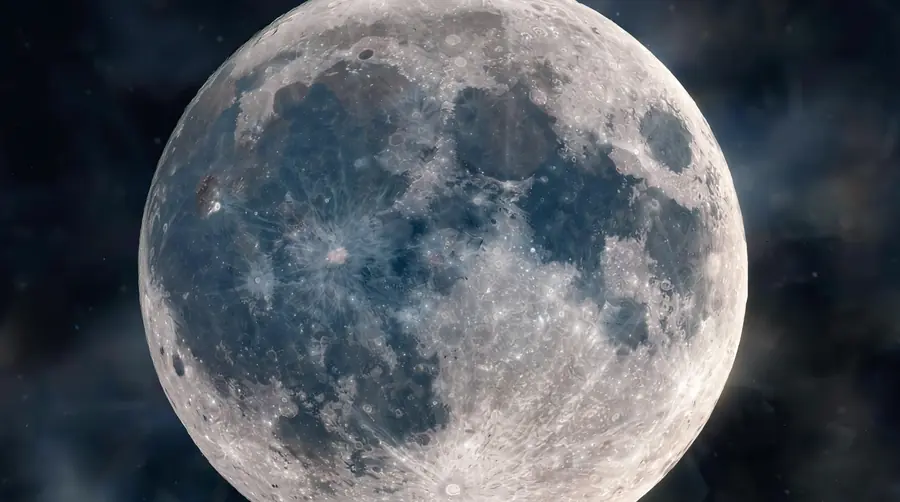
That is the mark people across China, Japan, Korea and Mesoamerica see as a rabbit in the moon. In this telling, the rabbit is up there because it died. The death is the whole reason for the memorial.
Of all the material available for a dead rabbit, that is the kindest and the most apt: a small animal’s death turned into the most visible object in the night sky.
Elsewhere the record is thin. In Britain and Ireland the hare was linked to witchcraft and shapeshifting, and the fear attached to killing one rather than finding one, since the hare might be a witch in another form. The rabbit’s broader symbolism of luck, fertility and the moon is strong across Han Chinese, Mexica, Greek and European traditions, but its death simply does not feature as an omen in any of them.
The Luckiest Charm in the World Is a Dead Rabbit
One last thing, and it is the detail I would want you to take away.
For most of the twentieth century the single most popular good-luck charm in the English-speaking world was a rabbit’s foot. People carried them on keychains. They were sold in their millions.
Which means the object our culture chose to represent good fortune, more than any other, is a piece of a dead rabbit.
If you found a dead rabbit and your first instinct was that you had encountered something unlucky, you had in fact encountered the raw material of the luckiest thing we know how to carry. That is not a trick of logic. It is a fairly direct statement about how little the dead rabbit has ever meant as a bad sign, and how much work we have been willing to make it do as a good one.
Frequently Asked Questions
What does seeing a dead bunny mean spiritually?
It is read as a cycle closing or a false start rather than a curse — something that had begun to grow and did not establish. The deeper reading is that the rabbit’s fertility and its mortality are the same adaptation: it breeds that fast because it dies that often, so a dead rabbit is the price of the abundance rather than its reversal.
Is a dead rabbit a bad omen?
No. There is no tradition that treats a dead rabbit as a warning about a person’s death — the animals carrying that reputation in Western folklore are birds. The rabbit has almost no ominous folklore at all, and the most popular luck charm in the English-speaking world is literally made from one.
Why do I keep finding dead rabbits?
Because rabbits die in enormous numbers — most wild rabbits do not survive their first year, since they are prey for almost everything and have no real defences. If you are finding several intact bodies with no wounds, though, that can indicate disease rather than predation and is worth reporting to local wildlife authorities.
What does it mean if a dead rabbit is on my doorstep?
Symbolically the threshold placement points at home and family rather than your path. Practically it is almost always a cat, which carries prey back to the place it considers safe and often leaves it at an entrance. Birds of prey also drop prey in flight.
Should I touch a dead rabbit?
Not with bare hands. Wild rabbits can carry tularemia, which is transmissible to people through handling a carcass, plus fleas and ticks leaving the body. Use a shovel or an inverted plastic bag, keep pets away, and if you own pet rabbits change your shoes before going near them, since rabbit haemorrhagic disease travels on footwear.